Supported by


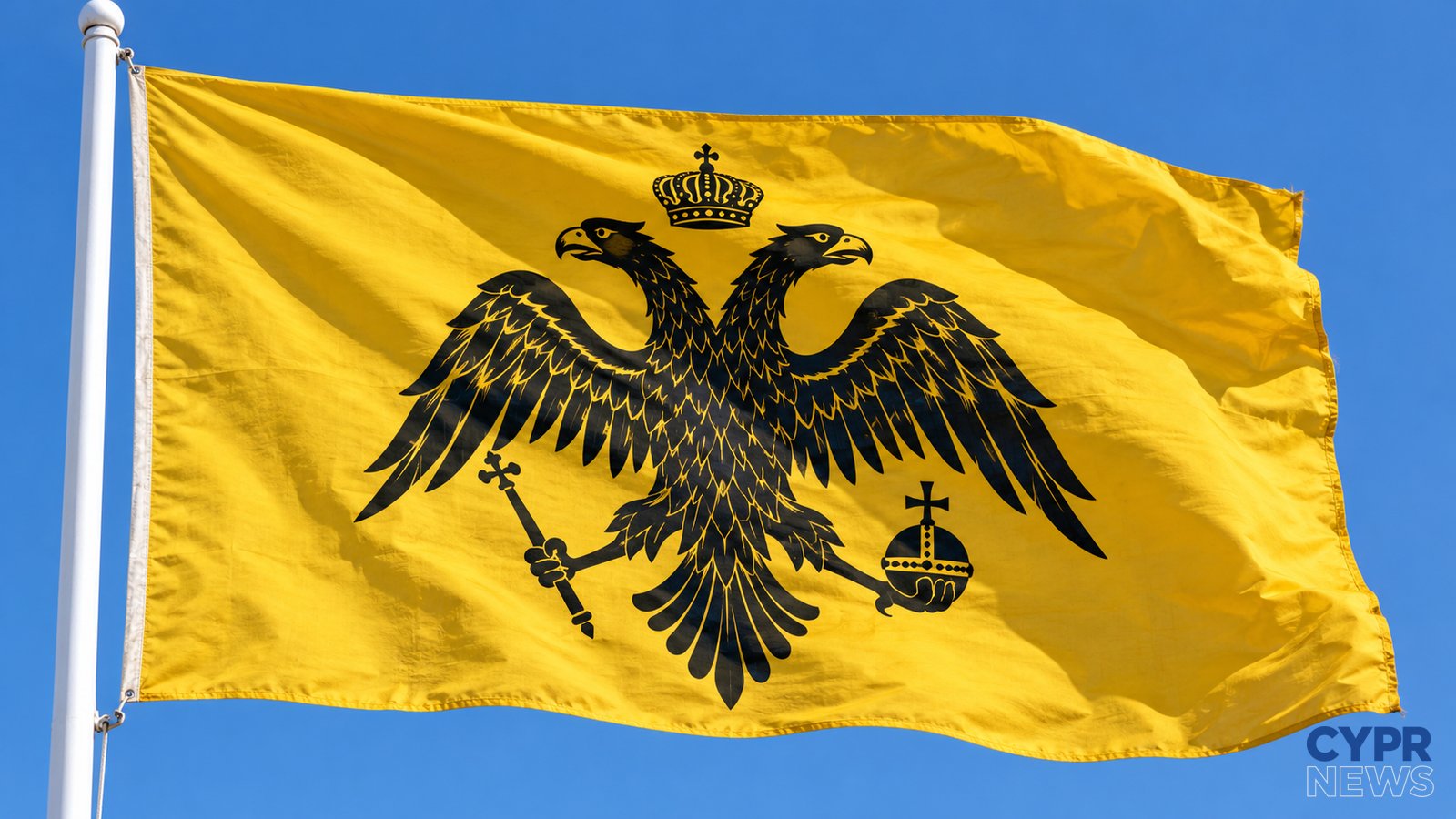
The yellow flag with a black double-headed eagle flies in front of many Orthodox churches and monasteries in Cyprus. It refers to the Byzantine tradition and its connections with Orthodoxy. It is not the national flag of Cyprus or Greece.
It is most easily spotted alongside the white flag of the Republic of Cyprus and the blue-and-white flag of Greece. Each refers to a different element of local identity: the state, Greek culture, or religious heritage. The double-headed eagle recalls the world of Byzantium, whose symbols survived the fall of the empire.
The black bird with two heads is one of the most recognizable motifs associated with the late Byzantine Empire.
The Church of Cyprus magazine "Apostolos Varnavas" describes it as the emblem of the Byzantine emperors after the reconquest of Constantinople in 1261. The publication also indicates its contemporary presence in the Ecumenical Patriarchate and the Orthodox churches of Greece and Cyprus.
This does not mean, however, that today's yellow ensign should be considered a single, unchanging flag design used throughout the empire. The historical eagle motif and its later ecclesiastical use are related but distinct parts of this history.
The national flag of Cyprus is easily recognizable. It features a copper outline of the island on a white background, with two green olive branches beneath it.
The map's color evokes copper, with which Cyprus has been associated since antiquity. Olive branches symbolize peace.
The yellow banner with the eagle has a different meaning. When placed near a church, it primarily refers to Orthodox tradition and Byzantine heritage. Its presence does not indicate that the building is the seat of another state.
Similarly, the Greek flag in front of a Cypriot church does not change the territorial affiliation of the place.
The most common interpretation is that of an East-West perspective. This explanation also appears in the aforementioned publication by the Church of Cyprus.
There are also explanations that link the heads with secular and spiritual authority. However, these interpretations should not be presented as a single, unchanging meaning established in Byzantium.
The most reliable clue remains the context. The eagle at the Cypriot temple alludes to the Byzantine tradition present in Greek Orthodoxy. Detailed interpretations of individual elements may vary.
In popular versions of the flag, a crown sits above the eagle. Insignia can be seen in the bird's talons, including a sword or scepter and an orb topped with a cross.
The drawings aren't always identical. The proportions, wing shapes, crown shapes, and finer details vary.
Therefore, the term "Byzantine flag used in the Greek Orthodox tradition" is more precise than calling each individual the official flag of all Orthodoxy.
It's not just the flagpole that's worth looking at. The double-headed eagle also appears as part of the church's decoration.
Its image can be seen on floors, fabrics, and church furnishings. The same motif we recognize from a distance on the flag, up close, reveals itself as part of the décor.
You don't need to know the entire history of Byzantium to notice how often it recurs. As you visit each church, it becomes one of the recognizable elements of their shared heritage.
The double-headed eagle is also found in the symbolism of other countries and communities. This doesn't mean that it has the same meaning everywhere.
The colors, the manner of presentation, and the place of use are important. The resemblance to the bird is not enough to identify the flag at the Cypriot monastery with the contemporary coat of arms of another country.
In Cyprus, the yellow flag is primarily a reminder of the Byzantine heritage present in a living religious tradition. It hangs next to an active church, not just in a museum display case—which is precisely why it's so easy to spot on a casual stroll.