Supported by


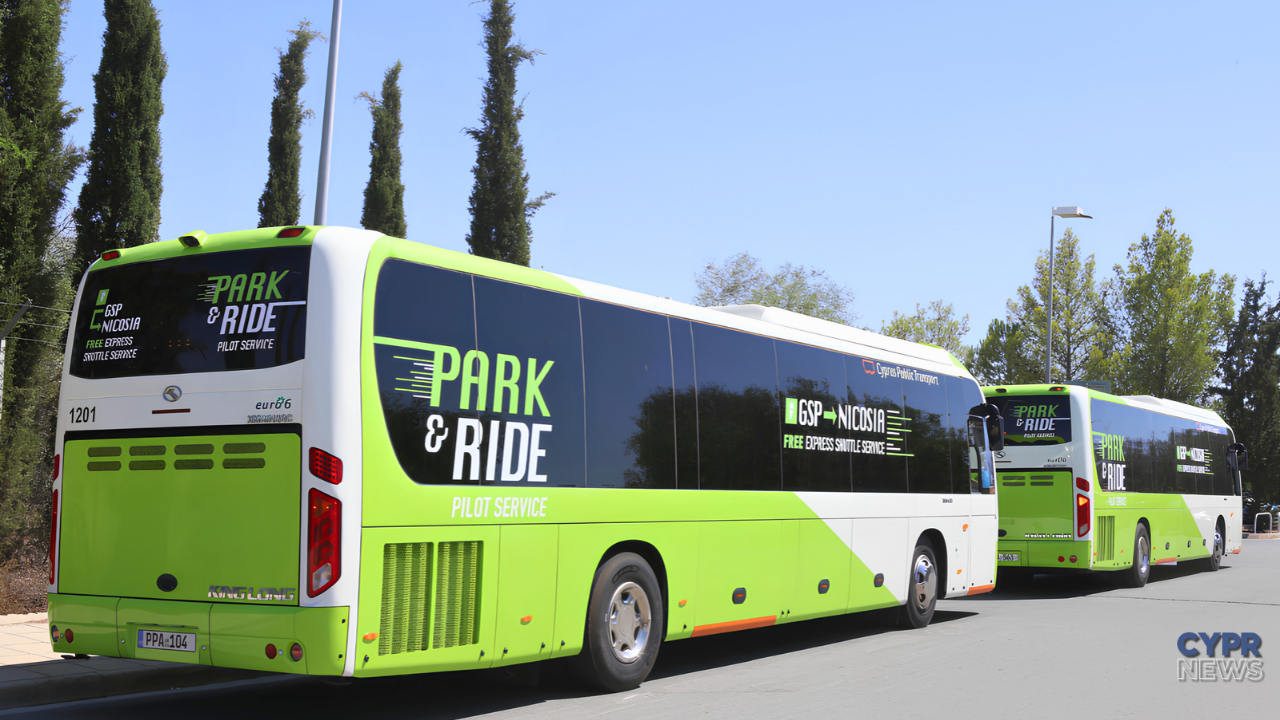
Buses in Nicosia failed to impress most participants in a test conducted by the Cyprus Audit Office. After traveling by public transport, 63% of those surveyed declared they would not use it again. Auditors found inaccurate timetables, outdated bus stop locations, a lack of information, and long waits for transfers.
The study involved 110 city employees who used buses as regular passengers from November 10 to December 1, 2025. The results are specific to this test and the Nicosia network—they are not a survey of all Cypriots. However, the report challenges the assumption that buses are always a cheaper and more convenient alternative to cars.
Test participants indicated that a car usually allowed them to reach their destination faster, offering greater comfort and privacy. Even the lower cost of a bus ride did not always compensate for the additional travel time.
Transfers proved particularly problematic. In cases requiring two buses, 47% of participants rated the travel time as unsatisfactory. 25% were satisfied.
On some routes, buses ran every one to two hours. At such a frequency, incorrect departure information or a missed transfer could significantly extend the journey.
The inspectors found cases in which the actual location of stops differed from the location indicated in the application and on the carrier's website by approximately 85 or 135 meters.
Stops that were no longer operational were also displayed. Route changes due to roadworks lacked up-to-date information.
In the two cases described, participants waited for about half an hour and then had to walk for another half an hour to another stop.
Departure times also varied. In one example, the online schedule showed a bus at 8:37 a.m., while the schedule indicated a departure at 7:40 a.m. and another at 10:37 a.m.
There was no timetable information at 55% of the stops checked. Electronic passenger information systems were found at only 13%.
Deficiencies also affected basic amenities: 22% of stops had neither seating nor shelter. 32% lacked shelter. These indicators describe partially overlapping groups and should not be added together.
Some stops still had the previous operator's line numbers, which were inconsistent with the current route system.
Walking was an additional obstacle. Fifty-six percent of participants required more than ten minutes of walking, and another 36 percent indicated five to ten minutes. This is especially important for seniors, people with limited mobility, and parents with children.
The report analyzes ten sample travel cost scenarios. Conclusions vary based on distance, number of passengers, vehicle type, and frequency of travel.
In the example given, a seven-kilometer trip in a petrol car was priced at €2.59, based on the reimbursement rate applicable to government employees. For two people, the cost was approximately €1.29 per passenger. A bus ticket in this comparison cost €2.70.
This is a model calculation, not a measure of each driver's actual expenses. However, it illustrates why someone who already owns a car doesn't always see a financial advantage in leaving it at home.
For the route from Latsia to the Citizen Service Center in Engomi, the report indicates a cost of approximately €4.80 one-way, or €9.60 for the return trip. This includes the time it takes to complete the journey.
The Ministry of Transport emphasizes that the comparison should also include the purchase of a car and other costs of owning it.
The Audit Office asks a different question: how much would a person who already owns a car spend if they left it at home and took the bus? This is the difference between the total cost of owning a vehicle and the expense associated with a specific trip.
Both approaches describe different decisions. Someone considering buying a car calculates differently than a driver choosing a means of transportation for the next day.
The report shows that convincing this second group requires more than just bus availability. It also requires reliable timetables, efficient transfers, and stops where passengers know where to wait and when their bus will arrive.
Sources: Cyprus Audit Office, Philenews, Cyprus News Agency.