Supported by


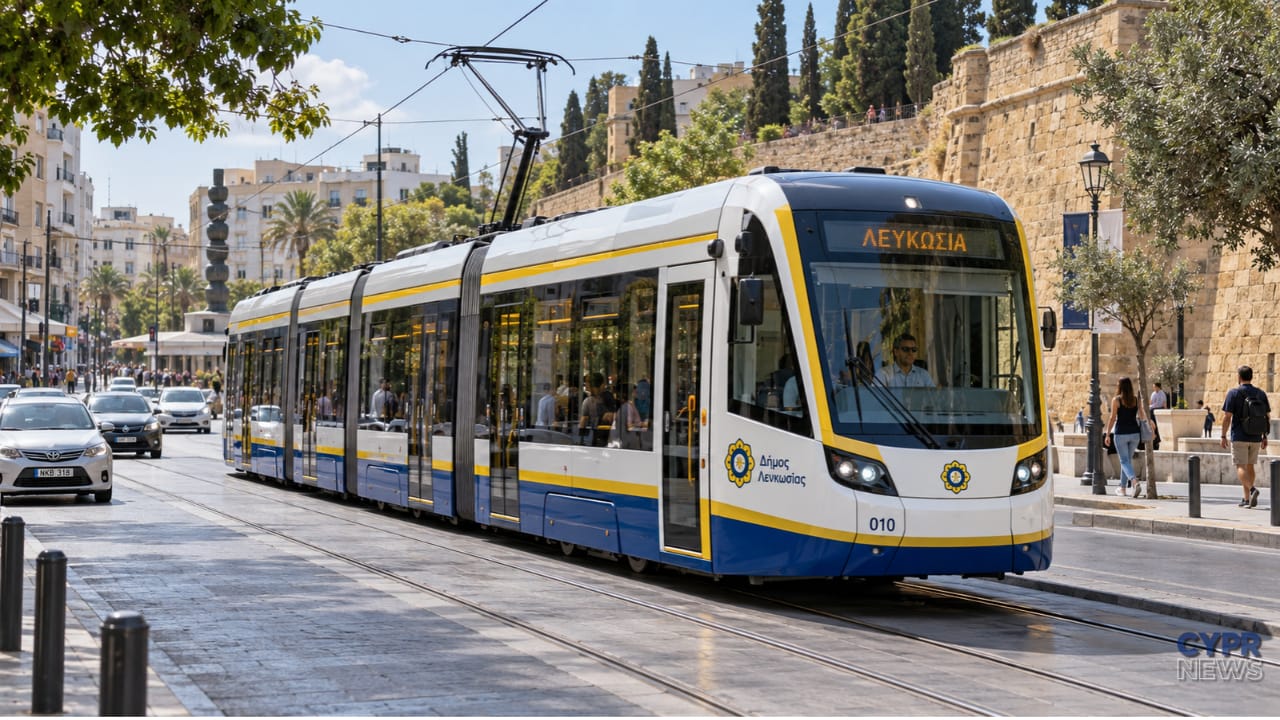
The Nicosia tramway could be approximately 20 kilometers long and cost €500-600 million to build. This is a preliminary estimate from Mayor Charalambos Prountzos, who wants this option seriously investigated. He cites a previous city study indicating that rail transport could serve the busiest routes.
This isn't a decision to begin construction, nor is it an approved budget. However, the mayor argues that discussions should begin now, as new bus contracts are being prepared for 2030–2040. The tram would operate alongside buses and help reduce residents' dependence on cars.
According to Prountzos, the city previously prepared an analysis of the line, which would be just over 14 kilometers long. Current authorities then considered the possibility of extending it by about six kilometers.
This led to the development of a concept for a route approximately 20 kilometers long. The mayor notes that the initial development was conducted in collaboration with a specialized transportation consulting firm.
However, the information presented does not include a detailed route, a list of stops, or a timeline for implementation. At this stage, the aim is to reassess the investment feasibility.
Length: approximately 20 km, after the considered extension of the earlier concept
Construction cost: initially 500–600 million euros
Cost per kilometer: estimated 25–30 million euros
Financing: to be explored as a public investment or public-private partnership
These are estimates presented by the mayor, not an approved cost estimate. A decision on construction has not been made.
Prountzos assumed an estimated cost of €25-30 million per kilometre, based on comparisons with recent investments in European cities, including Marseille.
At approximately 20 kilometers, this translates to €500–600 million. However, this is a comparative construction estimate that does not determine the final scope of the project or subsequent operating costs.
Electricity remains a key element of the analysis. The mayor links the tram idea to the Lefkothea municipal energy community initiative. He believes that using cheaper energy from renewable sources could improve operational profitability.
The mayor estimates that buses are currently responsible for only 4–5 percent of travel, despite years of investment in the system. He cites total expenditures exceeding one billion euros and argues that the results remain far from the intended goals.
This is the assessment presented by Prountzos. He points primarily to the lack of adequate infrastructure, including an effective network of bus lanes covering the city.
He believes that, with a few exceptions, a bus journey takes about twice as long as a car. He distinguishes between the comfort inside the vehicle and the overall passenger experience: the journey, the wait, and the time it takes to reach the destination.
The tram would serve the main communication axes. Buses would remain part of the system, complementing rail transport.
Prountzos also criticizes the division of responsibilities. Bus contracts are concluded between the Ministry of Transport and private operators, traffic management is handled by the Department of Public Works, and significant urban development investments depend on other institutions.
Local governments, however, have limited influence on these decisions, although residents expect them to improve everyday travel conditions.
According to the mayor, without better cooperation, it will be difficult to effectively reduce traffic jams. He emphasizes that the tram proposal is not intended to constitute a conflict with the ministry, but rather a joint exploration of alternatives.
The most important argument for commencing analytical work is the preparation of new bus contracts. Their terms will determine the operation of public transport in the years 2030–2040.
Before adopting these solutions, the mayor wants rail transport to be assessed as well – both in terms of costs and impact on public space, the environment and the daily journeys of residents.
It's currently unclear whether the Nicosia tram will receive funding or when it might be built. However, the proposal puts the discussion on a concrete scale: approximately 20 kilometers of route and an investment worth hundreds of millions of euros.
Sources: Philenews, statement by Mayor Charalambos Prountzos, SigmaLive