Supported by


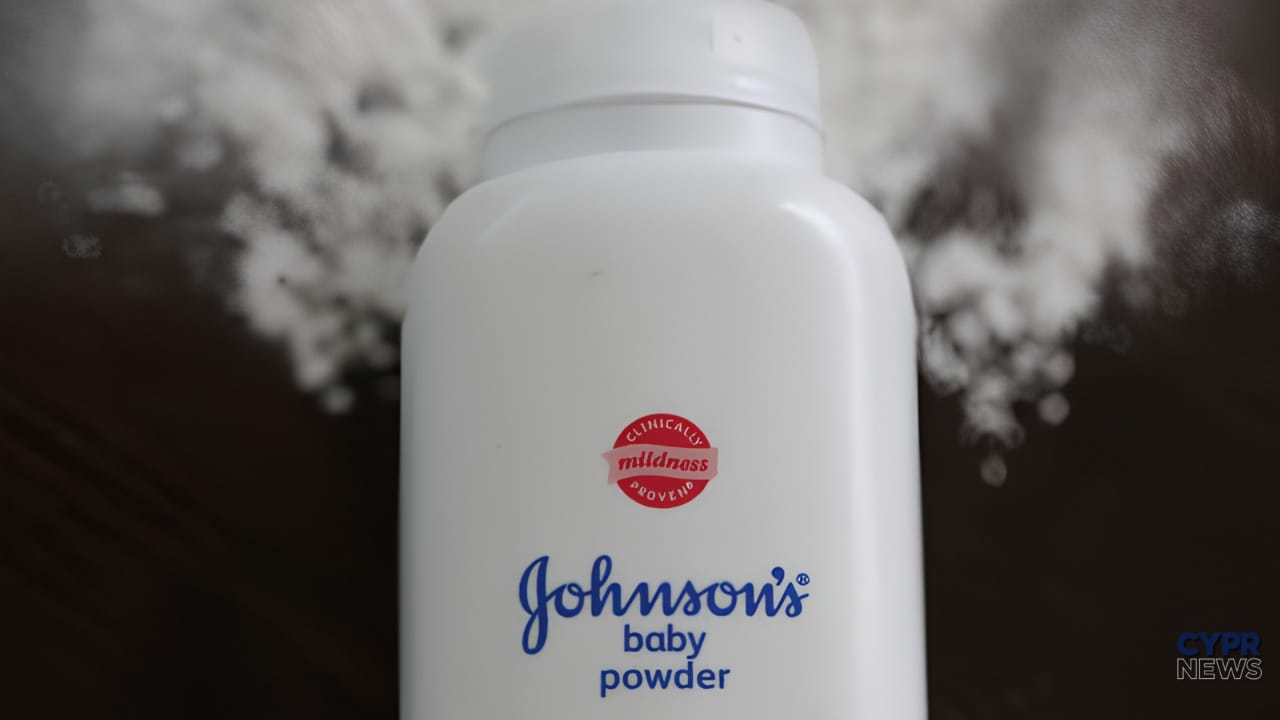
Johnson & Johnson powder is at the center of a pending legal dispute in Cyprus. A young woman is demanding more than 2 million euros in compensation, claiming that long-term use of the product led to mesothelioma and serious health consequences.
According to Philenews, her lawyers have already sent the company a letter of claim. If the matter isn't resolved at this stage, they plan to file a lawsuit. There is no judgment yet confirming the manufacturer's liability., and Johnson & Johnson has consistently denied allegations of carcinogenicity in its talc products.
According to an account provided by Philenews, the woman used the powder daily from childhood and into adulthood. She claims she developed mesothelioma and had to undergo treatment and surgery abroad.
The letter to the manufacturer included medical documentation and photos related to the procedures. The claim covers health consequences, medical costs, and financial losses.
According to her attorneys, her health problems continue to impact her daily life. She is represented by law firms Kleopa & Paraskeva LLC and Leonidas Georgiou.
Philenews describes the case as the first of its kind to be prepared in Cyprus. However, at this stage, it is a claim filed against the company, not a finalized legal proceeding.
Mesothelioma is a cancer of the thin layer of tissue that lines the chest and abdominal cavities, among other places. The National Cancer Institute indicates that its primary risk factor is exposure to asbestos.
In disputes over cosmetics containing talc, one of the key questions is the possibility of asbestos contamination. Both minerals can occur in adjacent deposits.
However, this does not mean that every product containing talc also contains asbestos. Determining the composition of a specific product and its possible link to disease requires separate evidence.
The woman's lawyers have sent a letter to the manufacturer demanding compensation. They plan to file a lawsuit if the matter is not resolved.
The woman attributes her illness to years of powder use. This connection has not yet been confirmed in the court's ruling.
The Cypriot claim comes amid years of ongoing international proceedings. These include allegations related to ovarian cancer and mesothelioma. These are distinct diseases and separate groups of cases.
July 27, 2026 Johnson & Johnson announced a proposed settlement for approximately 76,000 remaining ovarian cancer claims. The company pledged financial commitment of $5.5 billion.
The manufacturer's announcement indicates the condition for participation of at least 95 percent of remaining claimsTherefore, this proposal should not be presented as an unconditionally finalized settlement covering all matters relating to talc.
The settlement of the US claims also does not resolve the company's liability to the woman in Cyprus.
Johnson & Johnson maintains that its talc-based powder was safe, asbestos-free, and did not cause cancer. The company cites studies and the results of some court proceedings.
Simultaneously The International Agency for Research on Cancer, part of the WHO, classified talc as probably carcinogenic to humans in 2024 – group 2AThe assessment was based on limited evidence in humans, sufficient evidence from animal studies, and strong evidence of biological mechanisms.
This classification describes the substance's potential to cause cancer. It does not determine the likelihood of a specific person developing the disease and does not, by itself, prove that a particular cosmetic caused the disease. Talc containing asbestos remains classified as a carcinogen, as is the case with asbestos.
In 2020, the manufacturer discontinued sales of talc-based powder in the United States and Canada. Two years later, it announced a global transition to a formula with corn meal, which was supposed to take place in 2023.
The company presented this decision as a commercial change and an adjustment to its offering. It maintained its position regarding the safety of its previous product.
The Cypriot case therefore concerns the claimed long-term use of the earlier formula. The next steps will depend on the manufacturer's response and the decision of the woman's attorneys to file a lawsuit.
Sources: Philenews, Johnson & Johnson, International Agency for Research on Cancer, National Cancer Institute.