Supported by


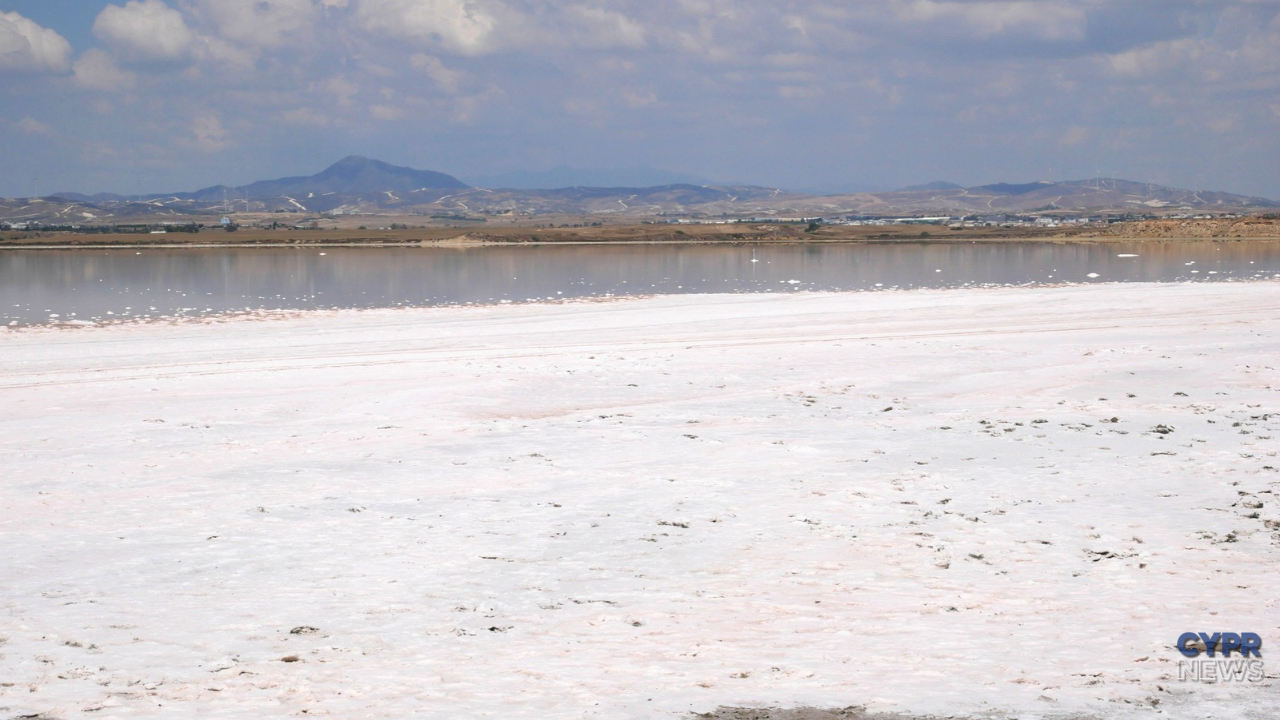
Larnaca Salt Lake has come under scrutiny by environmentalists. Terra Cypria reported observing a phenomenon in part of the reservoir that indicates severe eutrophication, or excessive enrichment of the water with nutrients. The organization is demanding an urgent investigation and clarification from the responsible institutions.
Disturbing changes were noticed near the sewage treatment plant. However, their cause and connection with the plant's operations have not been determined. Excessive algae growth could worsen living conditions for aquatic organisms, and indirectly for birds using the lake. The cited report did not mention any animal deaths.
In a news release published on October 14, Terra Cypria highlighted the intense accumulation of algae, locally known as "μάλλα," which the organization considered a sign of eutrophication.
This phenomenon is associated with an excess of nutrients, primarily nitrogen and phosphorus compounds. These become a breeding ground for algae, whose rapid growth can alter the appearance and functioning of the tank.
The problem escalates when dead organic matter begins to decompose. This process consumes dissolved oxygen in the water. A deficiency in oxygen can threaten aquatic organisms and disrupt the local food chain.
This doesn't mean, however, that such effects have yet been confirmed in Larnaca. Measurements and sample testing are needed to determine the scale of the problem.
Terra Cypria listed potential sources of excess nutrients: fertilizer runoff, sewage, and waste from livestock or industrial activities.
These are possible causes of eutrophication, not findings specific to this particular case. However, due to the proximity of the treatment plant, the organization submitted four questions to the responsible institutions.
What do environmentalists want to know?
These are questions raised by environmental organizations. The mere proximity of a treatment plant does not prove that the facility is responsible for the observed phenomenon.
The answers should help determine whether intervention is needed and what actions could reduce nutrient intake. Without test results, it's impossible to pinpoint the source of the problem or assign responsibility to a specific entity.
Larnaca Salt Lake is one of the most important wetlands in Cyprus, protected under the Natura 2000 network and the Ramsar Convention.
During the winter months, it is used by migratory birds, including flamingos. Their presence depends on factors such as water levels and food availability.
Small aquatic organisms, including crustaceans, play an important role in the local ecosystem. Deteriorating conditions for their development could therefore have consequences beyond the appearance of the water.
It is also a place with an extraordinary history, which we described earlier in CyprNews.
The Terra Cypria appeal concerns a specific section of the lake. It does not provide any basis for concluding that the entire complex has been polluted or that flamingos are in immediate danger.
The most important thing is to determine the water composition, the extent of the phenomenon, and its cause. Only such information will allow us to assess whether the observed changes are temporary or require broader protective measures.
Sources: Terra Cypria, Visit Cyprus, CyprusNews.