Skip to content
Supported by


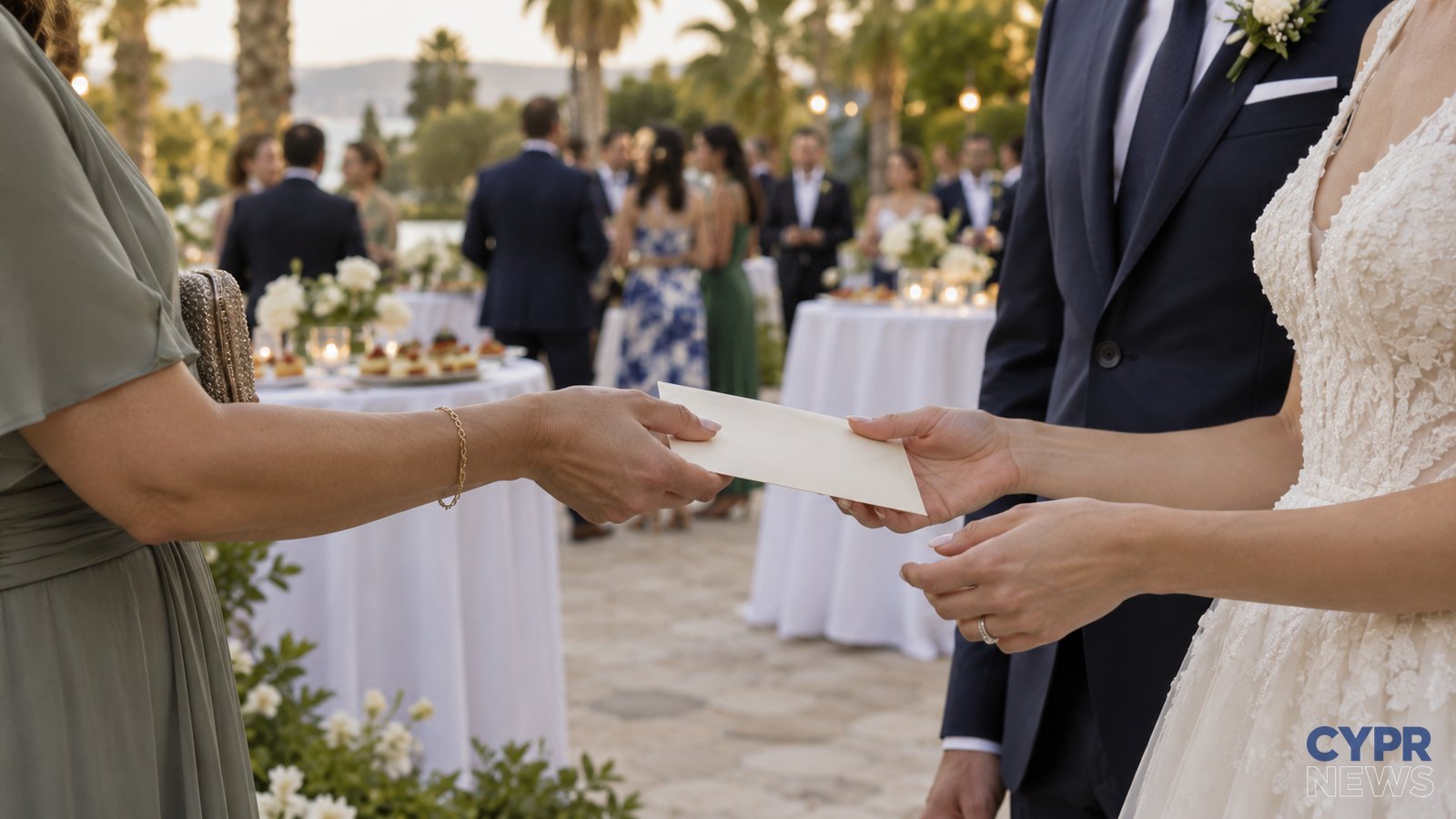
A Cypriot wedding can accommodate 1,500 guests, although the dinner only seats 200. Make no mistake about it. Most of the guests arrive for the cocktail hour: they exchange best wishes, hand over an envelope, partake of refreshments, and leave before the festivities resume.
For Poles, this division may come as a surprise. A wedding invitation is usually associated with a seat at the table and participation in the entire reception. In Cyprus, it's worth reading the invitation carefully—the ceremony, cocktail hour, and dinner can all involve different groups of guests.
In large, local weddings, there is a division into a large group invited to offer best wishes and a smaller group participating in dinner and entertainment.
The first part is sometimes referred to as cocktail receptionAn important element of it is chairetisi — receiving congratulations by the newlyweds.
The couple, often accompanied by their parents, welcomes the next guests. They offer best wishes, present a gift or envelope, and then proceed to refreshments.
Not everyone arrives at once. During a designated time period, some arrive while others leave. The number of people who attended the party may therefore be significantly greater than the number of attendees present at any one time.
The word "cocktail" might suggest a party with drinks and dancing. In this case, it's primarily a party that allows for a large gathering of people.
The guest can spend a short time there: wait in line for the couple, express wishes, chat with friends and go home.
This doesn't have to be interpreted as rushing or a lack of interest in the ceremony. If the invitation is only for this part, that's how expected participation may be.
However, we should not assume that after a cocktail, the table will automatically be set.
The list may include distant relatives, neighbors, co-workers, friends of parents and people associated with the hometown.
Not everyone needs to know the newlyweds intimately. An invitation can be an expression of the relationship between entire families.
Reciprocity is also important: parents remember who invited them to their children's celebrations, who they worked with, and who they have been in contact with for years.
With this arrangement, the list grows quickly. The 1,500 number is an example of the scale of a large wedding, not the average for the island. Many couples organize much smaller receptions.
Once the reception of wishes is over, the part intended for those invited to dinner begins.
This could be for 150, 200, or 300 participants, depending on the family, budget, and venue chosen. The meal is often served buffet-style, followed by music and dancing.
This is the part that most resembles a wedding known from Poland.
However, there's no one-size-fits-all model. A couple can invite everyone to dinner, forgo a large cocktail party, or organize a small celebration just for their closest friends.
A monetary gift is not reserved solely for those staying for dinner.
Guests arriving briefly to offer greetings may also present an envelope. Therefore, the simple Polish idea of a gift as a cover for a seat at the table should not be applied to this situation.
Financial support for newlyweds has a long history in Cyprus. In an ancient ritual ploumisma banknotes were pinned to their clothes while dancing.
A traditional wedding was a series of events, not just a single evening feast.
Preparations, cooking, family blessings, the ceremony, and visits could have taken up the following days. Archival descriptions also document the newlyweds' Monday dance, complete with the exchange of money.
This didn't mean several identical nights spent at the wedding hall. Each meeting had different purposes and wasn't always attended by the same group.
It's also not worth concluding this story with the notion that multi-day celebrations have completely disappeared. Family preparations and gatherings can extend beyond the day of the ceremony. However, a distinction must be made between an additional dinner or after-party and the preservation of the full, ancient village ritual.
In Cyprus, it is also customary to publish social wedding announcements in the press.
These can spread the word about the ceremony and reception, reaching a wide circle of friends and family. Invitation publishing services are still available.
Not every marriage announcement is a wedding invitation, however. The engagement announcement, the post-ceremony thank-you, and the invitation all have different meanings.
The mere presence of the couple's names in the newspaper doesn't mean that every reader should come to dinner. What matters is the precise wording of the ad.
Maybe, but it's not a nationwide rule.
The end time depends on the venue, arrangements with the organizer, and music and noise regulations. An outdoor patio party may have a different schedule than an indoor party.
Polish guests shouldn't expect a mandatory one-hour finish or dancing until dawn. The best guideline is the specific wedding program.
The biggest difference, however, begins earlier: in Cyprus, you can fully honor the invitation, exchange best wishes, and return home before dinner is served. With a thousand or fifteen hundred guests, such a short attendance allows for the celebration to reach a much wider circle of people.