Supported by


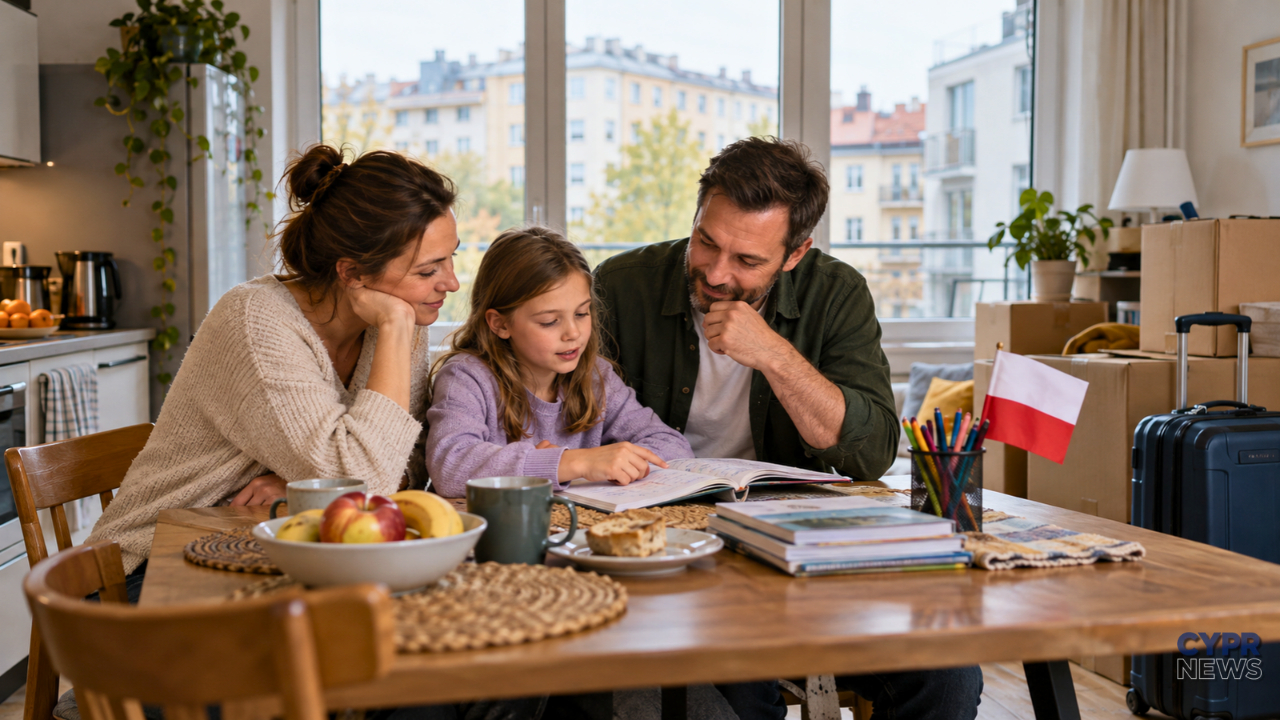
For years, Polish emigration was primarily discussed in terms of money. Higher salaries, better jobs, the ability to save for a house, or providing children with a better start in life – these were the arguments most frequently used in stories about leaving Poland.
Today, the landscape of emigration is much more complex. Poles still travel abroad for economic reasons, but after a few or a dozen years living abroad, the questions often begin to revolve around something entirely different. How to raise children bilingually? How to find your place in the local community? What to do when rent consumes a large portion of your salary? And finally, can you still simply return to Poland after years of emigration?
According to estimates by the Central Statistical Office, approximately 1.513 million Polish citizens were temporarily residing outside Poland at the end of 2025. Approximately 1.373 million of these were in Europe. However, these are estimates for people staying abroad for at least 12 months, and the data for 2025 are projected.
There are a number of portals for the Polish community abroad (e.g. Poles in Torrevieja, Poles in Alicante, Poles in Barcelona, Poles in Madrid, Poles in Valencia)
However, behind each of these numbers lies a completely different story.
One of the most specific challenges that emigrants face is finding suitable housing.
Ireland is a good example. For years, the country was one of the most important destinations for Polish emigration. According to the 2022 Irish census, the community of people with Polish citizenship or dual Polish-Irish citizenship numbered over 110,000, and Polish was the second most commonly used language in everyday life in Ireland after English.
At the same time, housing availability has become a factor influencing some emigrants' decisions to stay or return. High prices and the insufficient availability of rental housing have also been a serious problem for migrants in Ireland in recent years. The situation was particularly challenging for those renting apartments and trying to support their entire families.
This is a significant shift in thinking about emigration. Just because you can find a job doesn't mean life abroad will be easy.
You can be employed and have a regular income and still wonder if you will still be able to afford to live in the same city in a few months.
Initially, an immigrant needs language primarily to handle basic needs: finding a job, renting an apartment, talking to a doctor, or understanding documents. However, over time, their needs become much greater.
It's about being able to talk freely with a neighbor, your child's teacher, your doctor, or your coworkers. It's about humor, irony, local customs, and the feeling of being part of the place where you live.
Polish institutions and Polish diaspora organizations also draw attention to the other side of this problem – the preservation of the Polish language among children growing up outside the country.
Ireland boasts Polish schools run by Polish diplomatic missions, as well as numerous community schools. The Polish educational network includes schools in Dublin, Cork, Limerick, Waterford, and Cavan, among others.
For parents, it is not just a matter of learning to read and write in Polish.
It is also an attempt to answer the question of who a child who grows up between two countries will become.
First-generation emigrants typically remember Poland very well. For their children, the situation may be completely different.
A child can speak Polish at home, attend Polish school on weekends, and simultaneously conduct their entire daily life in the language of the country they live in. Their friends, school, first professional experiences, and memories may be primarily associated with Ireland, Germany, Spain, or the United Kingdom.
That is why some Polish organizations are paying more and more attention to the younger generation.
It's no longer just about maintaining tradition. Youth contacts, education, culture, sports, and the ability to maintain ties with Poland are also becoming important.
This shows that contemporary Polonia is no longer just a group of people who "left for a few years".
For many families, emigration has become a story spanning generations.
Moving away can mean greater independence, new opportunities, and experiencing a different world. At the same time, it can mean losing part of your existing social network.
In Poland, people can often count on family living a dozen or even dozens of kilometers away. Even simple problems can look different abroad. Illness, job loss, the need to find childcare, or help with paperwork can become a much greater challenge.
This is why Polish organizations have a much broader function than just organizing events featuring Polish music or cuisine.
Ireland is home to educational, cultural, social, and support organizations, including the Irish Polish Society, Forum Polonia Ireland, Polska Macierz Szkolna, and Polish community centers and organizations in Dublin.
For someone who has just arrived in the country, contact with someone who has gone through a similar path a few years earlier can sometimes be as important as finding a good job offer.
This is one of the more difficult paradoxes of living abroad. The Polish community provides a sense of security, allows for easier access to information, and helps one survive the first few months. On the other hand, long-term living abroad also requires familiarity with the language and the workings of the society in which the expatriate lives.
A Pole living in Germany must be familiar with German regulations. A Pole in Spain must navigate Spanish administration. A Pole in Ireland must function within the Irish labor, education, and healthcare systems.
The Polish community can help, but it cannot replace the local system.
Just a dozen or so years ago, returning to Poland was often portrayed as the end of the emigration story. Today, it increasingly represents another decision that requires careful consideration.
In 2026, the Ministry of Family, Labor and Social Policy published an analysis of Polish migration returns after 2015, prepared by the University of Warsaw's Center for Migration Research. It identified Great Britain, Germany, and Ireland, among others, as the most important destinations for earlier Polish migration.
However, returning is not always a simple “coming home.”
After a few, a dozen or even several dozen years, a person can have an apartment abroad, children attending a local school, friends, a job and an entire professional life.
At the same time, he may feel that Poland is his home.
And that's why the decision to return can be more difficult than the simple question, "Why don't you just come back?" might suggest.
The biggest mistake in describing Poles living abroad is probably the belief that they all left for the same reason.
Some wanted to earn money and return after a few years. Others left to find a partner. Some received a job offer abroad, others wanted to study. Some emigrated as children and today feel just as strongly connected to their home country as they do to Poland.
There are also those who, after a dozen or so years of emigration, are only just beginning to wonder where their place actually is.
The latest data shows that the number of Poles temporarily residing abroad decreased slightly in 2025 compared to the previous year. However, this does not mean the end of emigration or the return of an entire generation to Poland.
As it turns out, Poles are looking for more than just higher wages.
They are increasingly looking for stability, security, housing, a good school for their children, opportunities for development and a sense of belonging.
For some, the most important thing will be living in an international environment. For others, it will be finding Polish friends and the opportunity to raise their children in contact with the Polish language. Still others, years later, will be looking for a way to return to Poland without having to start all over again.
Behind the number of over one and a half million Poles living abroad are millions of everyday decisions: whether to rent or buy an apartment, stay or return, speak Polish or the language of the country of residence with a child, build a career abroad or try to use the experience gained in Poland.
And perhaps this is the most important feature of Polish emigration today.
It's no longer just a way of leaving Poland. For many people, it's become a way of life between two worlds.