Supported by


In Cyprus, tamata can be found in churches, monasteries, and pilgrimage sites. These are small metal plates depicting eyes, hands, legs, children, or entire human figures. Similar models were also formerly made from wax.
They are neither decoration nor religious talismans. They are votive offerings left by the faithful as a material sign of prayer, a promise, or thanksgiving. The symbol depicted on them most often indicates the intention.
Greek word τάμα – dam denotes a votive offering or gift connected with a request or promise. Its plural is τάματα – tamata.
Nowadays, the most common are thin metal plaques in silver or gold. They have a specific symbol embossed on them, allowing you to express your intention without writing it down.
The eye may represent a prayer for vision. The leg may represent a diseased limb or mobility problems. The child's figure may be related to health or the desire for offspring.
However, every votive offering should not be read as a code with a single, unchanging meaning. A hand can symbolize illness, injury, or work performed with hands. The entire silhouette can represent a specific person or a request regarding general health.
The ultimate meaning is known primarily to the person who left the votive offering.
A votive offering is intended to clearly convey an intention. Therefore, a symbol is chosen that represents a problem, a hope, or a message of thanks.
The most common depictions may refer to:
Tamata can hang next to an icon, be attached to a special plaque, or be left in a designated location. Sometimes there are just a few of them. In popular shrines, they can form entire collections.
Each of them may have a unique story that a casual visitor will never know.
Metal badges are not the only form of this tradition.
The Church of Cyprus describes an ancient practice related to the sanctuary Panagia ton Katharon in the Lapithos region, currently located in the northern, occupied part of the island.
The site was particularly associated with prayers for eye ailments. Gold and silver votive offerings were placed at the icon, considered miraculous, as well as wax models:
To a modern tourist, the sight of a wax leg or head in a church may seem odd. However, such objects were indeed part of the local religious culture.
Wax was readily available on the island thanks to candlemaking. It could be heated, shaped, and crafted into a model that suited a specific individual's intentions.
This is not a custom known only from old traditions.
In 2008, the Cyprus Mail visited a family-owned candle workshop in Agia Marinouda, near Paphos. Artisan Athanasia Kalogirou displayed beeswax models of a child's head, arms, legs, and eyes.
She explained that they were ordered by people planning to bring such votive offerings to church. Their intentions included health and the desire to have a child.
This shows that wax tamata are not just a thing of the past. Even in the 21st century, craftsmen were still operating on the island, making them to order.
Nowadays, however, metal plaques are much more common. They are durable, inexpensive, and available at many pilgrimage sites and religious shops.
Seeing a metal eye or a waxen limb, it's easy to mistake such an object for a religious amulet. However, this would be a misleading oversimplification.
In Orthodox practice, the dam is primarily a votive offering related to prayer. A piece of metal or wax alone is not intended to be a magical cure.
The prayer addressed to God, often through the intercession of the Blessed Virgin Mary or a specific saint, is significant. The object left behind is a visible sign of a request, promise, or gratitude.
This distinguishes tamata from amulets, which, according to folk beliefs, are supposed to protect the owner thanks to the power attributed to them.
The idea of leaving an object representing a diseased part of the body in a holy place is much older than Christianity.
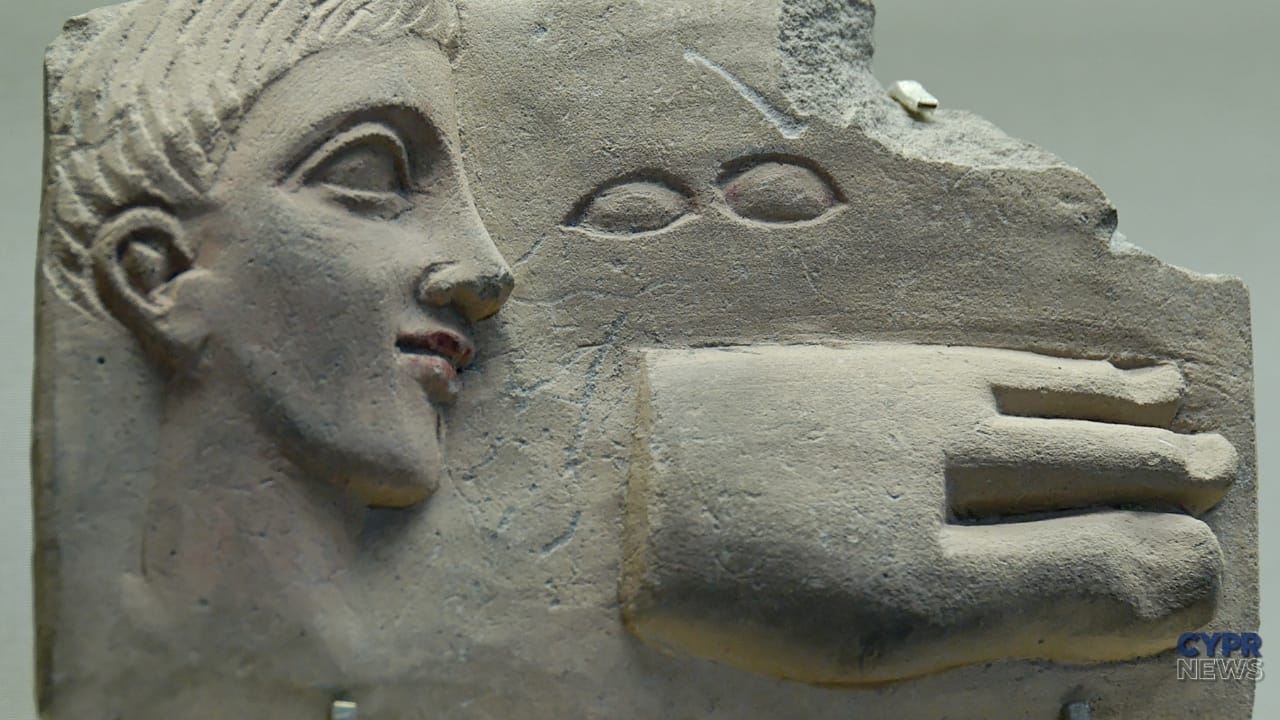
Cyprus provides a very interesting example. The Louvre Museum holds a votive stone slab from Golgoi. It was created during the Roman period and, according to the museum description, was dedicated by a man who likely suffered from vision problems and a foot deformity.
The plate shows body parts related to his ailments.
This does not mean that modern Orthodox tomata are a direct continuation of a single, unchanged practice from antiquity. Nor can one equate ancient beliefs with the contemporary Christian meaning of votive offerings.
The find, however, shows that the island's inhabitants already in ancient times presented their health problems in material form and left such objects in places of worship.
The tombstones left at the icon are not tourist props. They should not be removed, moved, or handled for photographic purposes.
It is worth treating them in the same way as other items donated by the faithful.
Interior photography regulations vary depending on the specific temple or monastery. In some areas, photography is permitted, while in others it is prohibited. Flash use may also be restricted.
It's best to check the signs at the entrance or ask the church administrator. When photographing permitted items, it's also important to be discreet and avoid disturbing those participating in prayer.
In Cypriot churches, the iconostasis, wall paintings, gilded icons, and burning candles are the main attractions. Small metal plaques can be easily overlooked.
One shows the eyes.
Second child.
Third leg.
To the casual visitor, they are merely symbols. To the person who left them, they may represent illness, fear, hope, the birth of a child, or gratitude for restored health.
That's why the tamata in Cyprus are much more interesting than they may seem. They're among the smallest objects found in a church, yet they often carry the most personal meaning.
Sources: Church of Cyprus, Cyprus Mail, Musée du Louvre.