Supported by


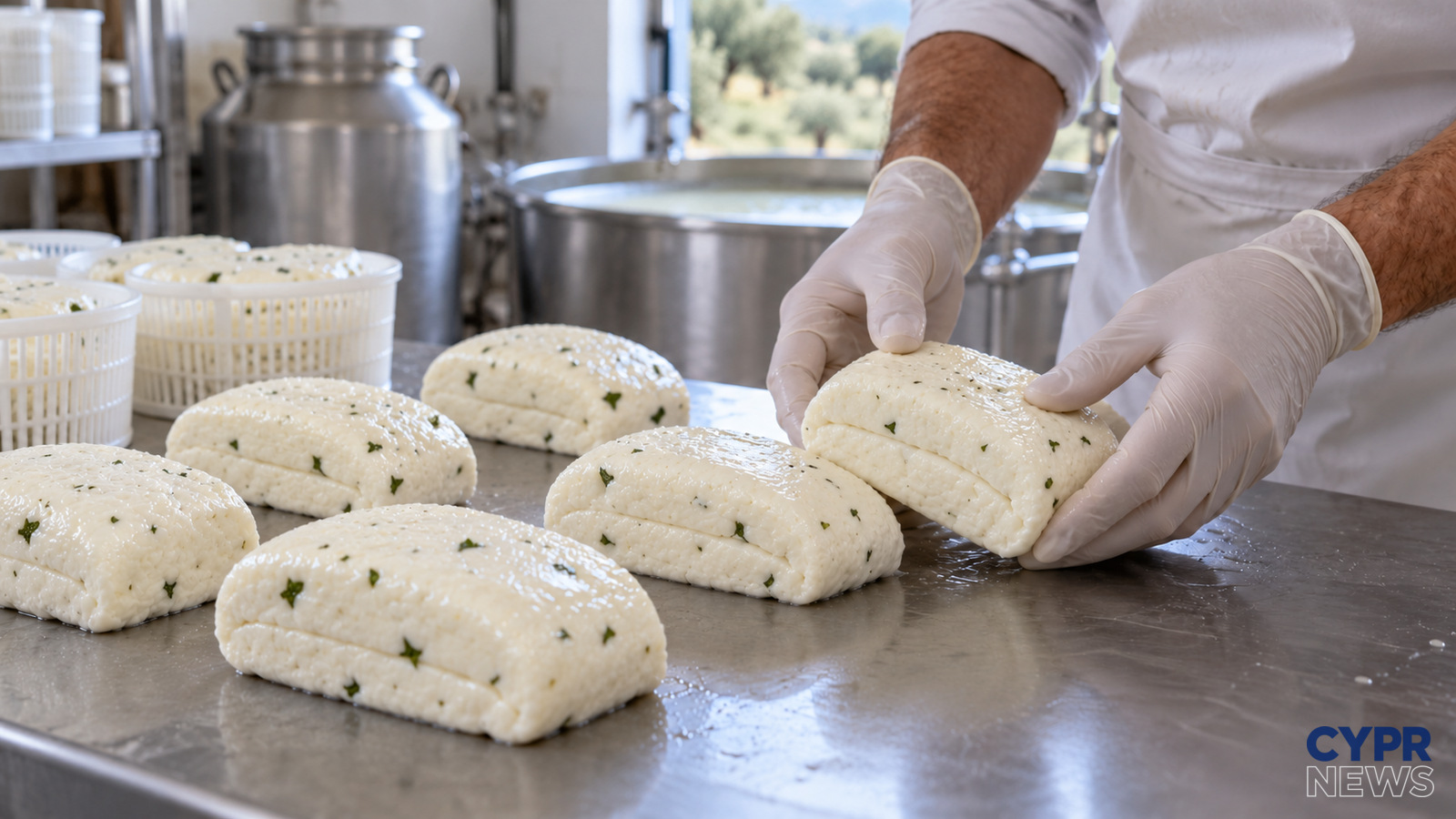
The composition of halloumi is once again sparking a dispute between farmers and cheese producers. Neofytos Neofytou, chairman of the "Głos Hodowców" organization, has announced his opposition to a potential change in the target ratio of sheep and goat milk, defined in industry discussions as 51%.
According to his statement, published on November 1st by Philenews, cheesemakers are expected to apply for a change to these rules. This does not constitute an approved change to the specification. The current framework provides for a transition period until July 2029, after which sheep's and goat's milk will predominate over cow's milk.
Neofytou said the organization had received information indicating that the target proportions would be maintained in 2029. However, he did not present a new decision of the European Commission in the cited report, which would determine a possible request to change the rules.
According to the head of "Głos Hodowców," cheese producers intend to send a letter regarding the milk proportions. Farmers, in turn, have announced both individual and collective actions to oppose the change.
Neofytou's belief that EU institutions will take into account the breeders' arguments remains the industry's position. It should not be presented as a final decision.
Halloumi has an EU Protected Designation of Origin, designated by the Polish abbreviation PDO or English PDO. This protection covers the names Χαλλούμι / Halloumi / Hellim and specific rules for cheesemaking.
The target specification allows for cow's milk, but the amount must be smaller than the amount of sheep's milk, goat's milk, or a mixture of the two. In public debate, this advantage is presented as a 51:49 ratio.
Therefore, it is not about the obligation to use only sheep and goat milk, nor about the complete exclusion of raw materials from cattle breeders.
A decision by the Cypriot authorities published in the Official Journal of the European Union in 2024 extended the transitional period by five years. The document highlights the need to increase sheep and goat milk production to ensure producers can meet the specifications.
During the transitional period, the minimum proportions are defined by the relevant national regulations. Therefore, the target requirement of a predominance of sheep's and goat's milk should not automatically be interpreted as the proportion that applies today to every batch of cheese.
Two separate issues are therefore important for the reader: the principles used during the industry's adaptation and the final composition of halloumi once this process is complete.
Neofytou called on cheese producers and cattle farmers to support the recovery of sheep and goat farming. He believes that without a concerted effort, halloumi's future will be at risk.
This is a warning about the direction of the industry's development, not a confirmation that cheese will disappear from stores. The quoted statement does not provide a forecast for shortages or a timeframe for a potential sales reduction.
The organization's head also noted that 95% of its members are sheep and goat farmers. This demonstrates why access to the market for the milk used in halloumi is particularly important to this group.
Discussions about changing the proportions didn't begin until November. As early as June, cheese producers were already discussing a request to change the specification, citing milk availability and the possibility of maintaining exports.
Farmers, in turn, argued that the solution should be to increase sheep and goat milk production. Their position links the protection of the halloumi name to the preservation of traditional farming practices on the island.
Both sides therefore refer to the future of the same product, but propose a different approach to the problem of supplying cheese dairies.
For Cypriot residents and tourists, the practical point of reference remains the PDO/PDO designation and the information on the packaging. The mere headline about the dispute doesn't mean that the recipes for all products will change from the following day.
There is also no basis for announcing a specific price increase based on this statement. Neofytou did not provide calculations regarding the costs to consumers.
At this stage, the breeders' announced opposition has been confirmed. Any changes to the rules should be assessed based on formal documents and decisions, not on the conviction of one party regarding the outcome of the future proceedings.
Sources: CNA, Philenews, Cyprus Mail, Official Journal of the European Union.