Supported by


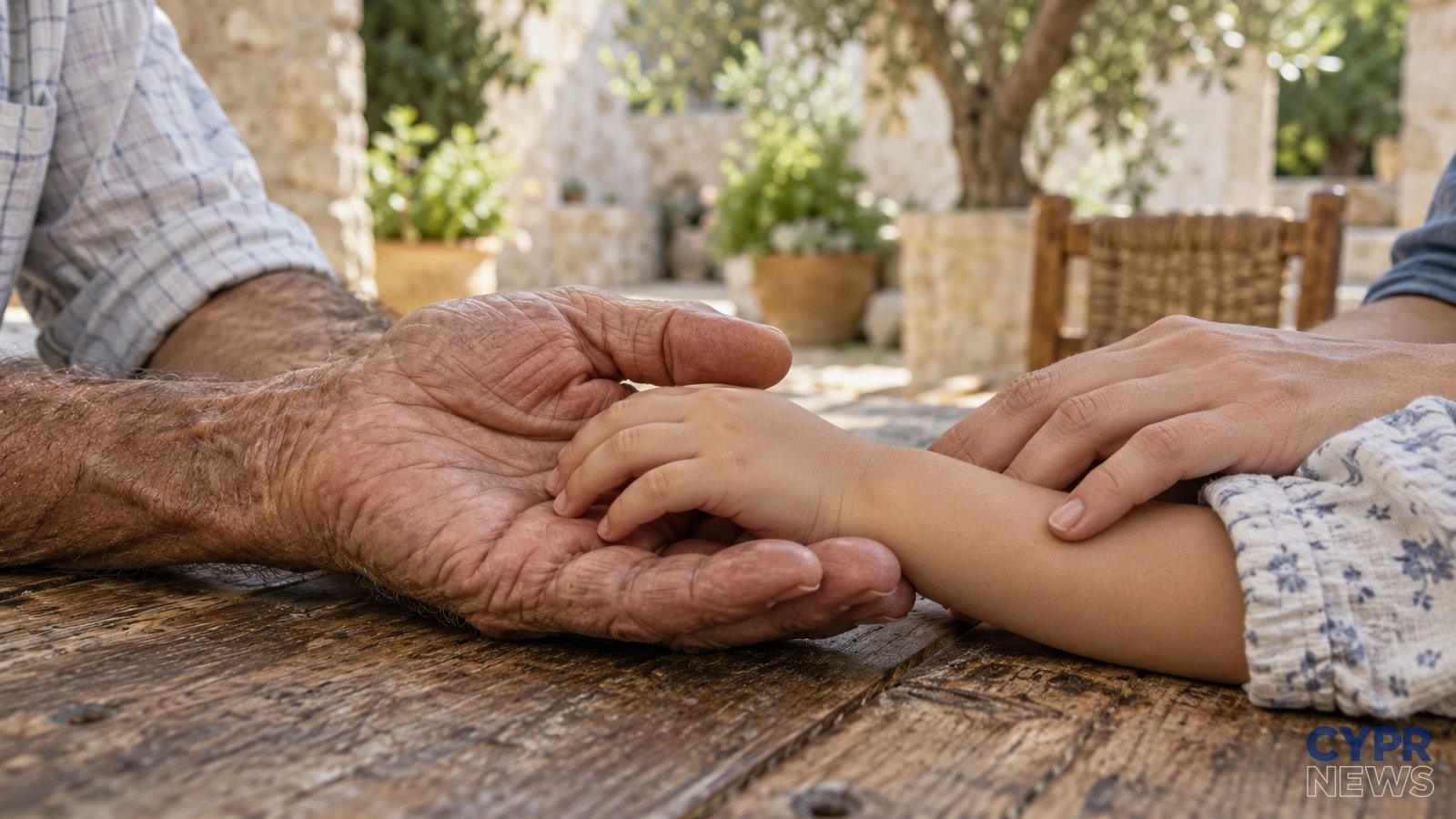
In a single Cypriot family, several cousins might be named Andreas, Georgios, or Maria. This often stems from the custom of naming children after their grandparents. If siblings commemorate the same parents in this way, the names tend to repeat in the next generation.
The tradition is particularly associated with the Greek Cypriot community on the island. However, it doesn't apply to every family and doesn't impose a single choice on parents. Instead, it helps to understand why several people at the table can respond to the same name.
Naming a child after a grandfather or grandmother is a way of showing respect and maintaining family continuity. The name connects the new family member to someone who was there before.
In the traditional model, the first son is often named after his paternal grandfather. Daughters are also named after their grandmothers, although the order and details depend on family custom.
Therefore, it's not worth treating this practice as a rigid formula. Some parents follow it very carefully, while others choose the name independently.
Imagine a grandfather named Andreas who has three sons. If each of them names their son after their father, there will be three cousins named Andreas in the family.
This is an example of how repetition occurs. It doesn't take a particularly large family or multiple generations.
In everyday conversations, context, a diminutive, or an additional adjective can be helpful. Similar solutions are common in Poland: "little Marek," "older Ania," or "Tomek od cioci."
The name used when introducing yourself is not always the same as in the document.
Konstantinos may be known as Kostas or Dinos, Athanasios as Thanasis, and Ioannis as Yiannis. Furthermore, there are different ways of writing Greek words in the Latin alphabet.
It's worth separating three things: the full name, its colloquial form, and the equivalent in another language. George may be the English equivalent of Georgios, but it's not simply another transliteration of the same Greek spelling.
When booking a ticket or filling out documents, please refer to the information on your ID document.
In Greek personal names, the ending "-ou" is often associated with the genitive case and indicates descent from the father.
Form Georgiou means "Georgios", and Andreou — "Andreasa." In a traditional patronymic, a name derived from the father's name, such a spelling helped indicate which person was being referred to.
A patronymic may appear alongside the given name and family name. It is therefore a separate element from the family name passed down through the family.
However, you cannot read every "-ou" ending according to the same rule. The surname Georgiou itself does not prove that the father of its current owner is named Georgios. It may be a hereditary surname whose origins date back to earlier generations.
Many of the names passed down are associated with saints venerated in Orthodox Christianity. Family custom thus intertwines with the religious calendar.
A child can be named after a grandfather, if both share the same patron saint. If other relatives make a similar decision, family name day wishes will extend to several people at once.
This doesn't mean, however, that everyone with the same name always celebrates their name day on the same date. The choice of patron saint and the traditions of a particular family may play a role.
When meeting another Andreas or Maria, you might ask if the name was chosen after someone close. The answer might lead to a story about a grandfather, grandmother, or someone important to the parents.
However, this shouldn't be assumed. The name may have been chosen based on its sound, patron saint, or personal preference.
Recurring names are a vestige of family tradition. However, what remains most interesting is what a particular family tells about them.