Supported by


We wait for an examination, and the person who arrives later is admitted first. In the emergency department, this doesn't necessarily mean skipping the queue. Priority is primarily determined by health status and the urgency of the need.
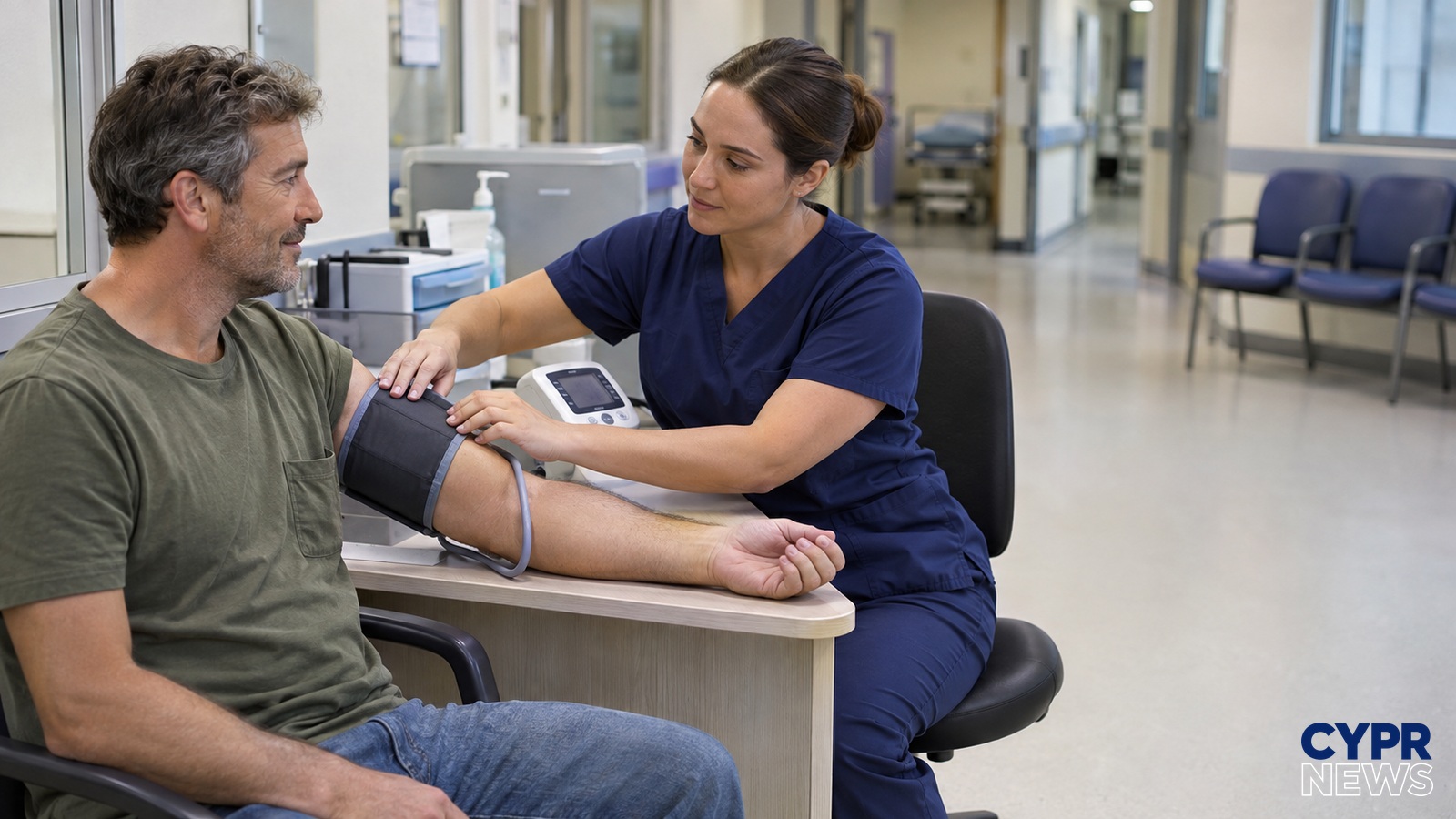
In Cypriot emergency departments, known as TAEP or A&E, this is accomplished through triage, or initial medical assessment. Trained nursing staff determine who requires immediate intervention and who can more safely wait.
The initial assessment takes into account symptoms, the severity of the illness or injury, and the risk of deterioration. It is not a routine check-in or a full medical examination.
Staff prioritize assistance according to a five-step system Emergency Severity Index - ESIThe need for urgent intervention is important, as is the expected scope of testing and treatment for stable patients.
Therefore, a person with life-threatening symptoms may be referred for care before someone who waits longer. From the outside, we can't always assess the seriousness of their condition.
Category 1 has the highest priority, involving the need for immediate life-saving intervention. Category 2 concerns high-risk situations and also requires a very rapid response.
In lower categories, waiting is possible. However, this does not mean that the patient's problem is unimportant or that it does not require diagnostics.
| Category | What does it mean? |
|---|---|
| 1 | Immediate life-saving intervention needed. |
| 2 | High risk or other symptoms requiring very urgent evaluation and assistance. |
| 3 | No indications for category 1 or 2, but with an anticipated need for more extensive diagnosis or treatment. |
| 4 | A less complex case, with a limited scope of additional benefits expected. |
| 5 | Lowest priority; usually without need for additional diagnostic or treatment resources beyond assessment and advice. |
The category is determined by medical personnel. The table is not intended for self-assessment and does not specify a guaranteed waiting time.
Your health condition may change after the first conversation with staff. If you feel worse while waiting, you must report it immediately.
This applies to both ourselves and the person we are accompanying. We shouldn't assume that staff will notice every change in a crowded waiting room.
It's important to clearly state which symptoms have worsened or appeared since the initial assessment. This information allows for re-triage and, if necessary, a change in priority.
A lower category does not mean that it is safe to return home without consulting staff.
Symptoms that require urgent evaluation include, but are not limited to, severe chest pain, significant shortness of breath, serious bleeding, signs of stroke, seizures, and severe injuries.
Urgent assessment is also required fever of 38°C or higher in an infant under three months of ageThis is not a complete list of emergency situations.
In case of life-threatening situations, please call 112The dispatcher needs information about the incident, exact location, and a contact number. You must remain on the line and follow instructions.
For non-urgent problems, a personal doctor may be the appropriate place to seek help. However, the discouragement of waiting times should not be the deciding factor, especially when symptoms are new, severe, or cause concern.
Triage is intended to provide the fastest care to those who need it most. A longer wait doesn't eliminate our symptoms, but priority may be given to another patient due to a threat that isn't immediately apparent.
Sources: OKYPY, Emergency Nurses Association.