Skip to content
Supported by


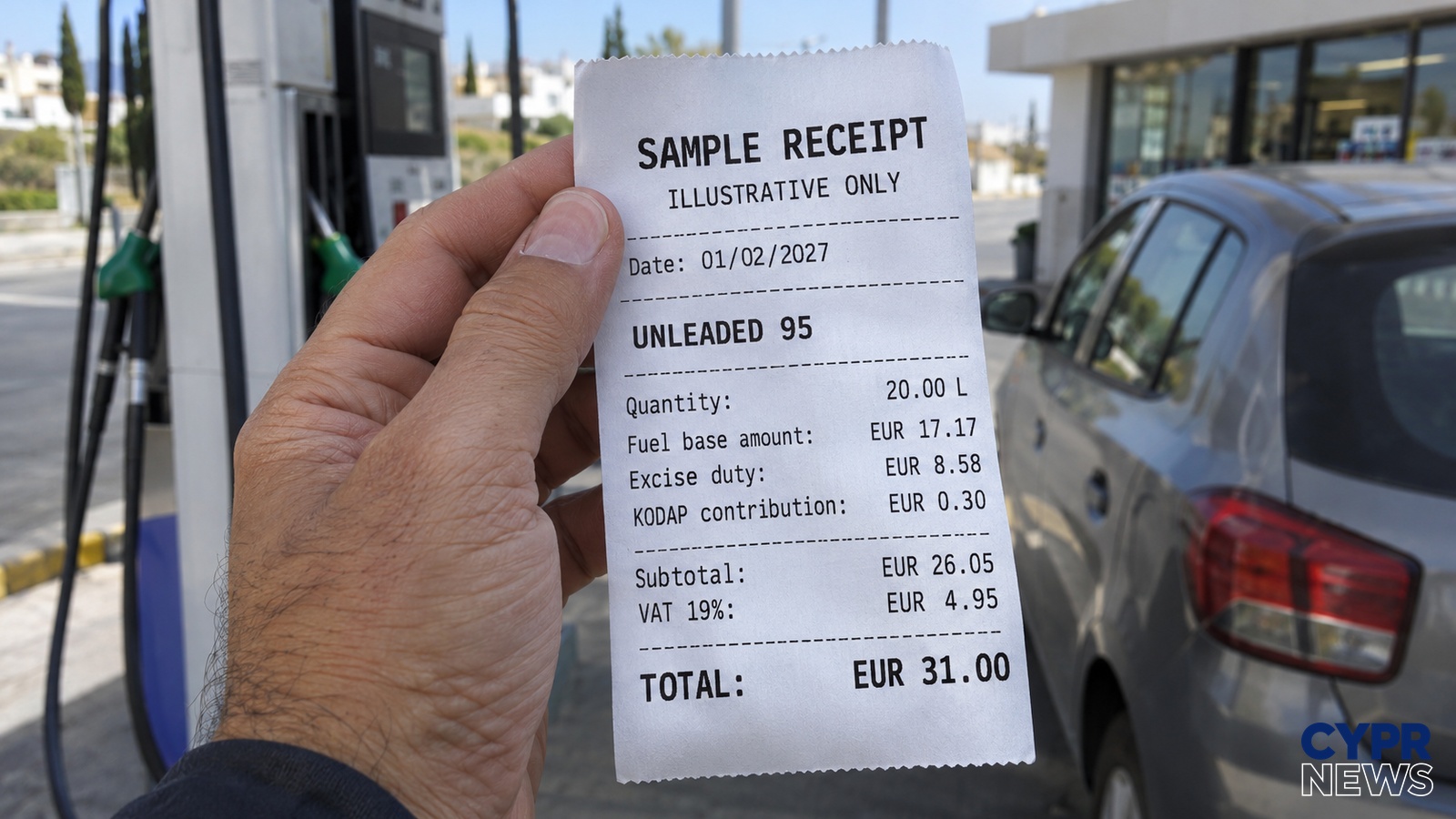
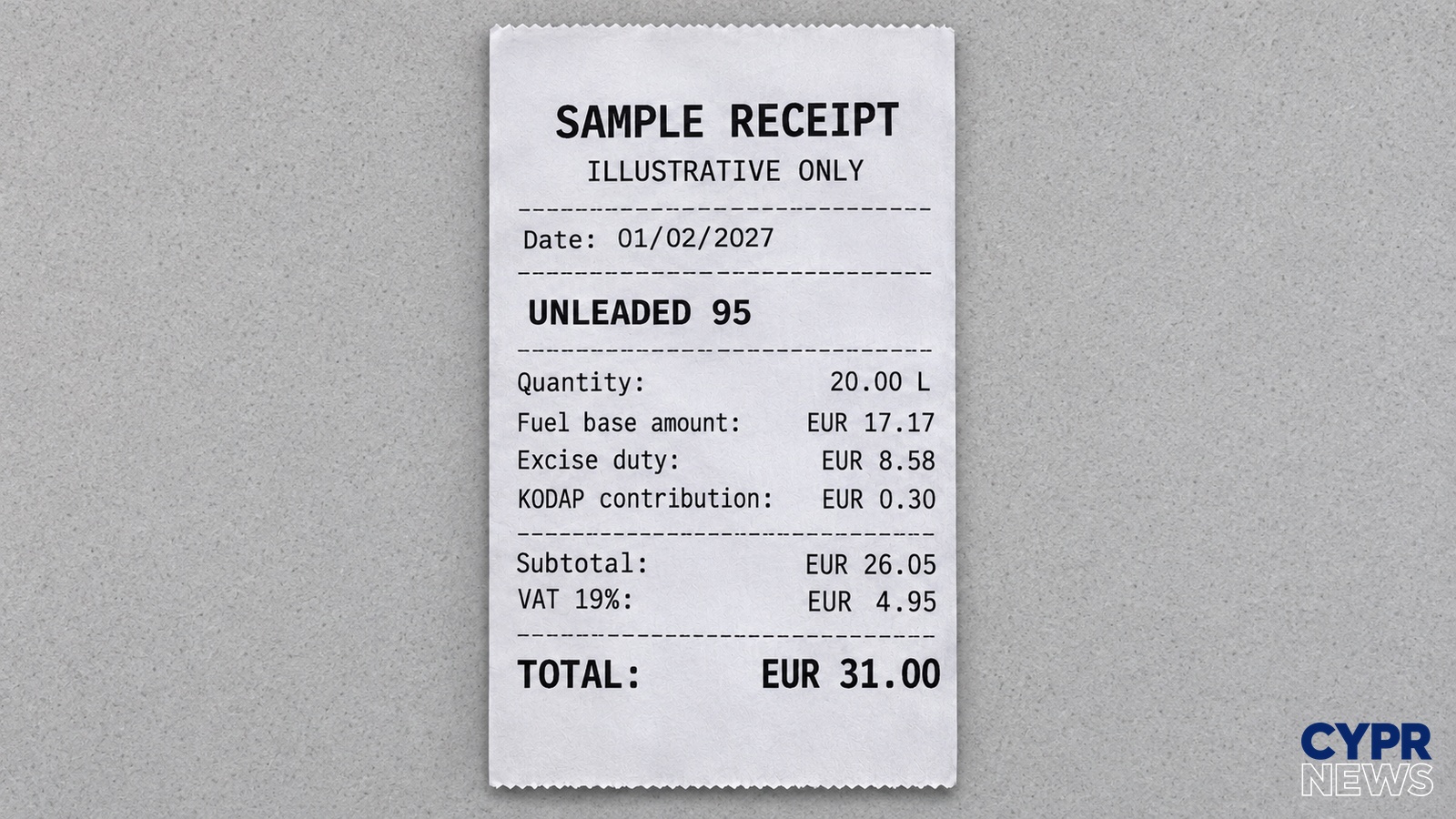
Fuel receipts will show how much of the bill is for fuel and how much is for taxes and other charges. Parliament unanimously approved the change, which will take effect on February 1, 2027. Stations will be given time to adapt their systems.
MPs also approved an extension of the reduced excise tax on gasoline and diesel fuel until March 31, 2027. The current tax relief was due to expire at the end of November. This represents a continuation of the current tax reduction, not a sign of further price drops at the pump.
DISY MP Nikos Georgiou proposed an amendment to the Consumer Protection Act. Its goal is to clearly present the components of the final price.
On the receipt or invoice the consumer should see:
The base price does not represent the cost of production itself or the station's profit. Separating taxes from the rest of the price does not yet provide a complete picture of the costs of purchasing, transport, distribution and margins.
The new rules are primarily intended to help customers understand what they are paying for.
Georgiou admitted that simply changing the receipt's appearance won't lower prices. However, it will make it easier to monitor the market and assess how tax changes affect drivers' bills.
During the debate, allegations were raised about stations failing to pass on tax reductions to retail prices. Clearer documents are intended to facilitate the investigation of such situations.
However, they won't replace comparing offers. The final price is also influenced by fluctuating fuel and delivery costs, so maintaining a lower excise tax doesn't guarantee a constant tax rate.
The second decision of the Parliament is to extend the tax relief on car fuels by four months – from December 1, 2026 to March 31, 2027.
Excise tax will remain at the following level:
In both cases the difference is 7 euro cents excise tax per literAfter taking into account the impact of VAT, this corresponds to 8.33 euro cents per liter.
This is an important distinction: the excise tax rates quoted do not include VAT. The figure of 8.33 eurocents describes the total tax effect of the reduction.
When purchasing 50 liters, this means approximately 4.17 euros less tax burden compared to the standard excise tax, with other price components remaining unchanged.
Drivers should not expect a new reduction of this amount following the vote. The relief is already in force - Parliament has decided to maintain it.
According to estimates presented in the bill, the four-month extension means approximately EUR 25 million less tax revenue.
During the debate, it was also pointed out that the current reduced rates correspond to EU minimums. The government is in talks with the European Commission regarding the possibility of further reductions under the derogation.
However, no approval of the additional reduction was announced. The talks do not change the current rates or the agreed duration of the discount.
From February 1, 2027 stations must present a detailed breakdown of fuel prices on receipts and invoices.
Down March 31, 2027 however, the extended excise tax relief on petrol and diesel remains.
The first change affects the information customers receive. The second avoids the return of higher excise taxes after November. Neither of these decisions establishes a maximum fuel price.
Sources: Philenews, Cyprus Mail.