Supported by


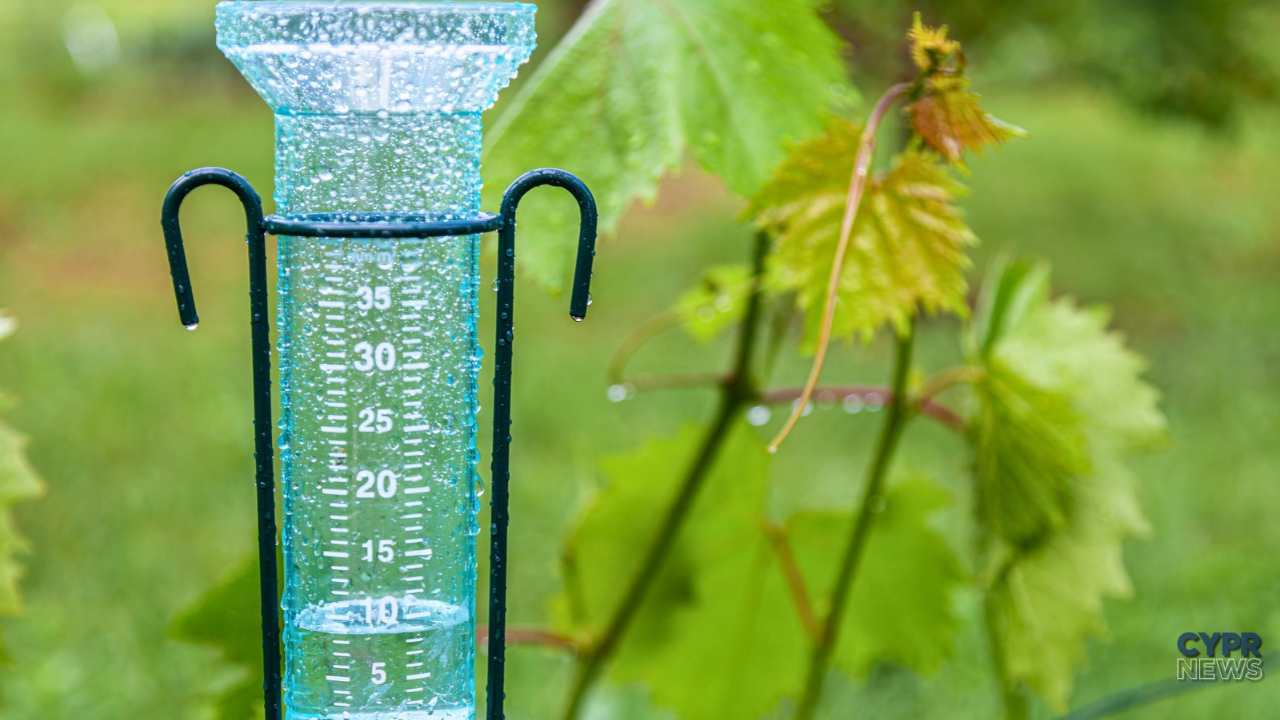
Precipitation in Cyprus already exceeded the norm for the entire month in mid-October. From October 1st to the morning of October 15th, an average of 51.2 mm of rain fell, approximately 157 percent of the October norm. This is preliminary data for areas controlled by the Republic of Cyprus.
The rain also brought inflows to reservoirs. According to data cited by Politis on October 15, the largest dams stored approximately 102.76 million cubic meters of water, which is 35.3 percent full. The reserves were approximately three times larger than a year earlier, but this difference cannot be attributed to a single storm or recent rainfall.
The long-term average rainfall for the entire month of October is 32.7 mm. However, by 9:00 a.m. on Thursday, October 15, an average of 51.2 mm had already been recorded.
This means about 57 percent more rain than normal for the entire monthThe reported 157% is the degree of compliance with the standard, not the extent to which it has been exceeded.
The reference point for meteorological data is the average of the years 1961–1990This doesn't mean it's a historical record either—a comparison with a full series of measurements would be necessary to make such a determination.
From 1 to the morning of October 15
51.2 mm
The norm for the whole of October
32.7 mm
Meeting the monthly norm
about 157%
Preliminary data for areas controlled by the Republic of Cyprus. The standard refers to the period 1961–1990. One millimeter of precipitation corresponds to one liter of water per square meter.
In the 24 hours to Thursday morning, the average rainfall was 21.3 mmThis is about 42 percent of the total rainfall recorded since the beginning of the month.
However, the rainfall distribution was very uneven. In Drousei, 47.8 mm, in Prodromos and Agros after 43.9 mm, at the Kannaviou Dam 39 mm, and in Platania 38.8 mm.
The station at Larnaca Airport received significantly less rain. Since the beginning of the month, it has recorded only 9 mm, corresponding to about 29 percent of the local October norm.
The island average, therefore, does not describe the situation in every locality. Intense downpours in the west and mountains can occur simultaneously with much more modest rainfall in other regions.
Wednesday's storms were accompanied by significant electrical activity. The Lightning Imager on the Meteosat Third Generation satellite recorded 9711 discharge detections over Cyprus and the surrounding sea.
From this 6955 were on land, and 2756 to the seaThese data should not be confused with the number of lightning strikes on the ground—satellite measurements also include electrical activity in the clouds.
The Meteorology Department said the density of detections reflected the intensity of storms for which an orange warning had previously been issued.
Data on the largest dams show a significantly larger water supply than in the same period in 2025.
The data concerns the largest reservoirs included in the list provided by Politis.
| Period | Water supply | Filling |
|---|---|---|
| October 15, 2026 | 102.76 million m³ | 35.3 percent |
| Analogous period 2025 | 33.62 million m³ | 11.6 percent |
Total reservoir storage is not the same as the inflow following the most recent rainfall. Year-over-year comparisons take into account the balance of many months.
The improved situation compared to last year provides a greater margin of safety before winter. However, approximately two-thirds of these reservoirs' capacity remains unfilled.
The significance of subsequent rainfall events will depend not only on their intensity but also on their location. For dams, rainfall in their catchment areas and the amount of water that actually reaches the reservoirs are particularly important.
The first half of October brought positive news for the water economy. However, it does not provide a basis for declaring an end to water shortage problems.
The situation in the coming months will be determined by the entire rainy season, inflows to dams, and the use of accumulated reserves. Even after heavy rainfall, water conservation remains essential.
Sources: Department of Meteorology, Department of Water Development, Politis, Philenews.