Supported by


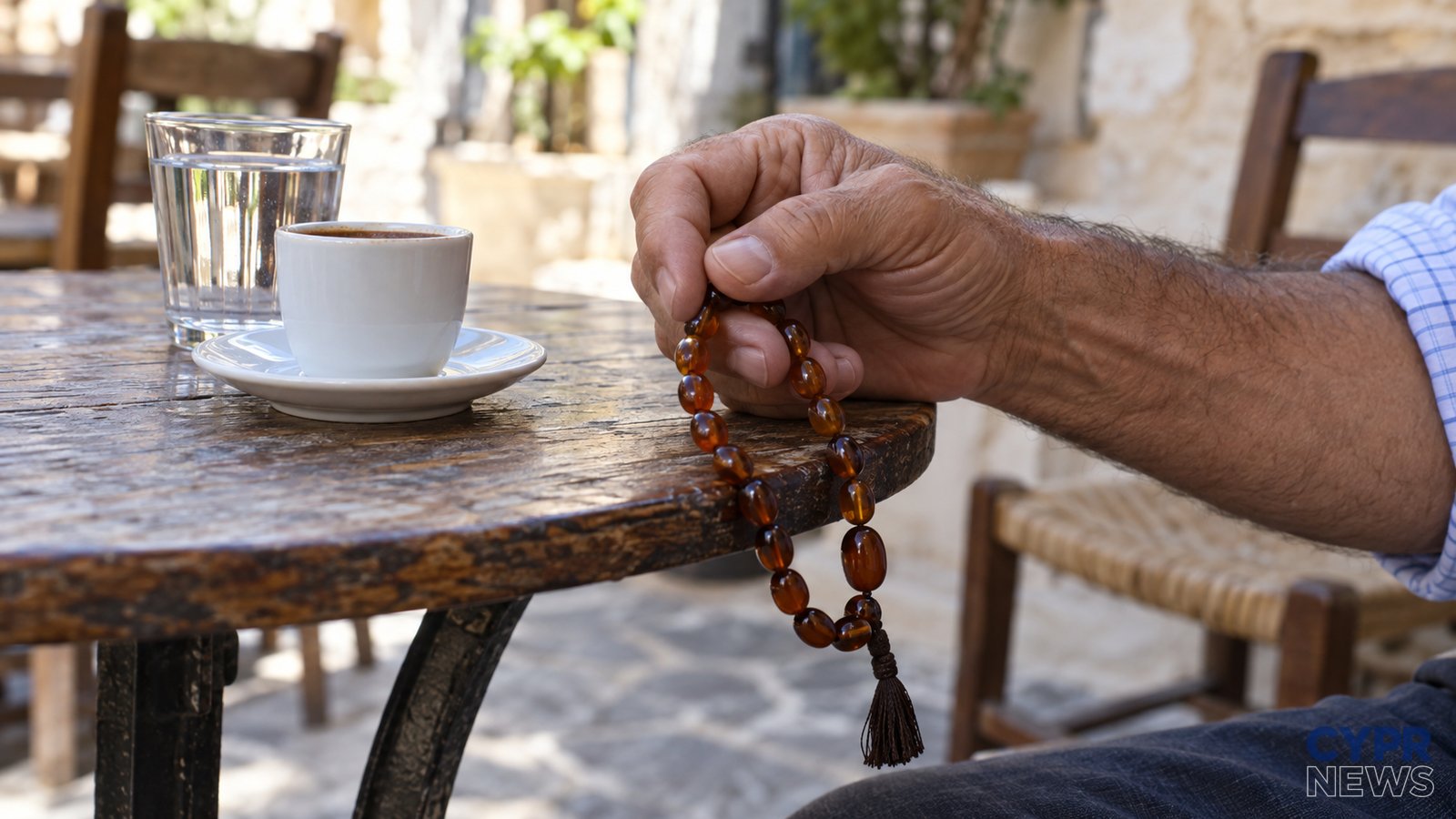
In Cyprus, komboloi can be seen in the hands of men sitting outside a café, strolling, or chatting with friends. The string of beads resembles a rosary, but is a secular object. It serves to occupy the hands, provide rest, and provide pleasure from repetitive movement.
The beads are moved between the fingers, rotated, and tapped rhythmically. For some, the komboloi is a daily coffee companion; for others, it's a souvenir from a loved one or a collector's item. Its meaning is best appreciated through touch, weight, and sound.
Greek name κομπολόι refers to beads connected by a string that allows them to move freely. This play allows them to be turned in the hand and struck against each other.
In English, komboloi is often called worry beads, or "worry beads." The repetitive movements can help the wearer relax or keep their hands occupied while waiting. However, there's no need to assign them any specific purpose. Sometimes it's simply a pleasant activity to engage in conversation.
Komboloi is associated with both Greek and Cypriot cultures. It's appropriate for a leisurely gathering at a table: coffee cooling, conversation lingering, and beads sliding between fingers.
Similar-sounding names can be misleading. Comboskini This is an Orthodox prayer rope, traditionally made of knots tied together. By moving the knots between the fingers, the believer repeats a prayer, primarily the Jesus Prayer.
Komboloi has a different purpose. It doesn't require reciting prayers or following a religious order. Therefore, the mere sight of the beads in one's hand isn't enough to indicate that one is praying.
The history of bead strings is older and much broader than that of the modern komboloi. Across cultures, they have been used for prayer, rituals, and to indicate the wearer's status.
The secular form developed in the eastern Mediterranean region. According to a representative of the Komboloi Museum in Nafplio, its origins can be dated to around the early 19th century, suggesting inspiration from Muslim prayer beads known from the Ottoman period. However, the exact moment of this transformation remains difficult to pinpoint.
Over time, the komboloi became a fixture in cafes, ports, and everyday gatherings. An object previously associated with counting gained a new purpose: it could be moved for the sheer pleasure of it.
It's easiest to slide the beads individually between your fingers. You can also divide them into two groups and rotate the string so that they meet on either side of your hand.
Some do it calmly, almost silently. Others prefer a distinct rhythm. Skilled users perform rapid movements with one hand, but beginners don't need to immediately imitate their dexterity.
There's no scoring system or mandatory sequence. The important thing is that the object fits comfortably in your hand and the beads have room to move.
Komboloi are made from wood, seeds, horn, amber, stones, and synthetic materials, among other materials. The material influences the weight, surface temperature, and sound of the beads.
Equally important is the craftsmanship. The choice of string, the finish of the holes, and the weight distribution all determine whether the beads move smoothly. Two similar-looking pieces can feel completely different.
For a collector, the rarity of an item or its age may be important. For the everyday user, the most important factor is that they have become accustomed to a particular piece over the years.
When purchasing a komboloi, it's a good idea to check how it feels in your hand. Do the beads slide freely? Is their weight comfortable for the wearer? Do the string and connections look solid?
It's also worth asking about the material and where it was made. The amber color alone doesn't confirm that the beads are actually made of amber.
The best komboloi doesn't have to be the most expensive. It's an item meant to be used, so the choice is often determined by a simple detail: you want to hold it in your hand for a while longer.