Supported by


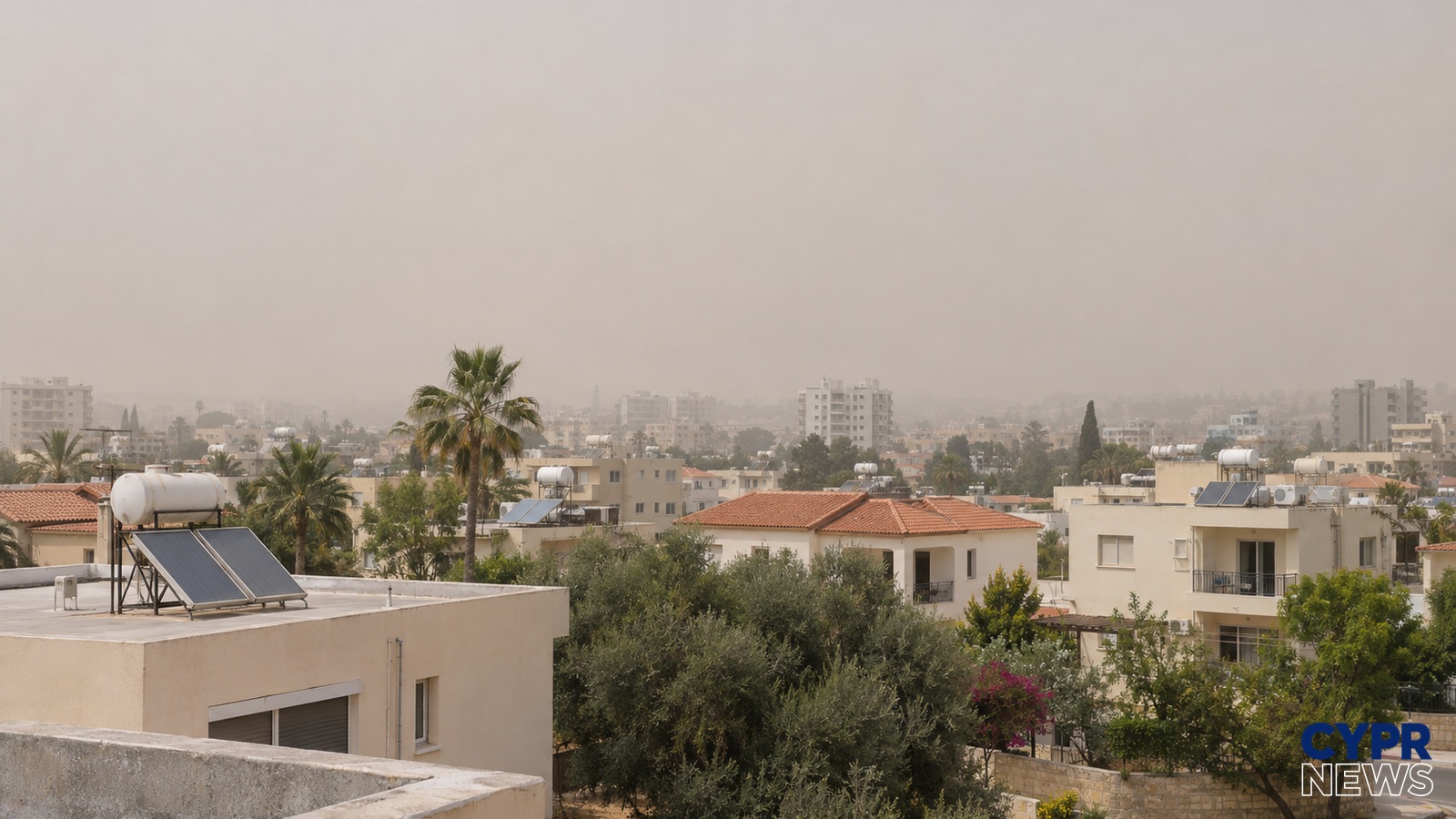
Air quality in Cyprus is to be monitored more closely thanks to the CiROCCO project. A network of sensors has been established in the South Nicosia–Idalion municipality, and the CyEnvHub platform combines the measurements with PM10 concentration forecasts for the next 72 hours.
The system will also warn registered users of elevated dust concentrations. This part of the solution is still undergoing evaluation: forecasts, notification reliability, and service performance with user input are being tested. It is not yet a fully verified island-wide alert system.
The Cyprus part of the project is being implemented by the University of Cyprus, the Department of Labour Inspection, and the Municipality of South Nicosia–Idalion. Five low-cost sensors and an AQMesh measurement station have been installed within its boundaries.
The devices were deployed in various settings: at a primary school, in residential areas, at an industrial plant, and in agricultural and livestock areas. The AQMesh station is located at the municipal cultural center in Idalion.
The network collects information on particulate matter and meteorological conditions. According to the project, it has already recorded at least three episodes of desert dust influx.
The CyEnvHub platform combines project data with measurements from the University of Cyprus and the Department of Labour Inspection. Users can access maps and graphs showing changes in concentrations.
72-hour PM10 forecasts use data from the European Copernicus Atmosphere Monitoring Service (CAMS) to help you assess upcoming conditions for your chosen location.
However, the dust concentration forecast is not a measurement or guarantee that conditions will develop exactly as predicted. The project continues to evaluate the effectiveness of forecasting.
The project provides notifications to registered users when forecasts indicate that established warning thresholds have been exceeded or sensors detect elevated PM10 concentrations.
These thresholds should not be presented as a boundary separating completely safe air from harmful air. Their purpose is to trigger a warning according to accepted principles.
Final verification of notification delivery and user testing are underway. Therefore, information about the service being developed should not be taken as a guarantee that everyone interested will receive a reliable alert immediately.
One of the researchers' tasks is to assess the reliability of cheaper sensors. To this end, the project's device was placed next to the Labor Inspection Department station at the third primary school in Idalion to compare results.
The CiROCCO network does not replace official air quality measurements. It can provide additional information about local differences and help develop monitoring.
The CyEnvHub website also notes that the current readings presented are not validated. This caveat should be taken into account when interpreting a single result.
The pilot project has also been extended to the Amathounta municipality in Limassol District. Two low-cost sensors and an AQMesh station have been installed there. Commissioning and testing are ongoing.
The continued operation of such networks will depend on, among other things, equipment maintenance, data transmission, quality control and the establishment of responsibility for maintenance after the project is completed.
CiROCCO began on March 1, 2023, and is scheduled to end on November 30, 2026. It brings together 12 organizations from seven countries and is coordinated by the Greek Institute of Communication and Computer Systems (ICCS).
The total budget is 3,583,218.75 euros, of which The European Union's contribution amounts to EUR 3,147,975The amounts apply to the entire international project, not just the sensor installation in Cyprus.
The project lays the foundation for more accurate dust monitoring and early notification of residents. Ongoing tests will determine how effective the warning service will be in everyday use.
Sources: CORDIS, University of Cyprus, Department of Labour Inspection, Philenews