Supported by


Name days in Cyprus can be an important occasion for family gatherings, phone calls, and well-wishes from coworkers. In the Greek Orthodox tradition, name days are associated with the commemoration of the patron saint in the church calendar. In some families, this day is given greater importance than birthdays.
However, this rule doesn't apply to all islanders. The significance of name days depends on family customs, religious beliefs, and personal preferences. Some invite guests, others bring sweets to work, and still others accept wishes over the phone. The most common response is "ochrona polla."
The Greek word for name day is onomastiki eorti, or name day. In everyday conversation, you can also hear shorter yiorti - holiday.
Traditionally, a person named after a saint celebrates their name day on the day of their commemoration. This combines a personal celebration with the religious calendar.
However, not every name can be assigned a single, obvious date. There may be several saints with the same name, and some celebrations depend on the date of Easter. Therefore, it's best to ask the specific person when they celebrate.
Birthdays are something to remember or check. The day of a popular patron saint, however, is a shared occasion for many people.
There may be several birthday people celebrating at the same time in family, friends, or at work. Wishes are exchanged in person, by phone, through messages, and on social media.
This doesn't mean that birthdays are of little importance. Both occasions can be celebrated with equal solemnity, and if they fall close together, the gathering can be shared.
Return χρόνια πολλά, written in Polish as Protective Polla, literally means "many years." It is used on name days, but also on birthdays and holidays.
There's no need to prepare a long greeting. Brief wishes and a reminder of someone's special occasion are usually sufficient, especially in neighborly or professional relationships.
However, it's worth making sure that the person actually celebrates their name day on that day. Similar-sounding names, diminutives, and different family traditions can lead to confusion.
Bringing cake or chocolates to work is not unusual for Poles. A similar custom can be found in Cyprus.
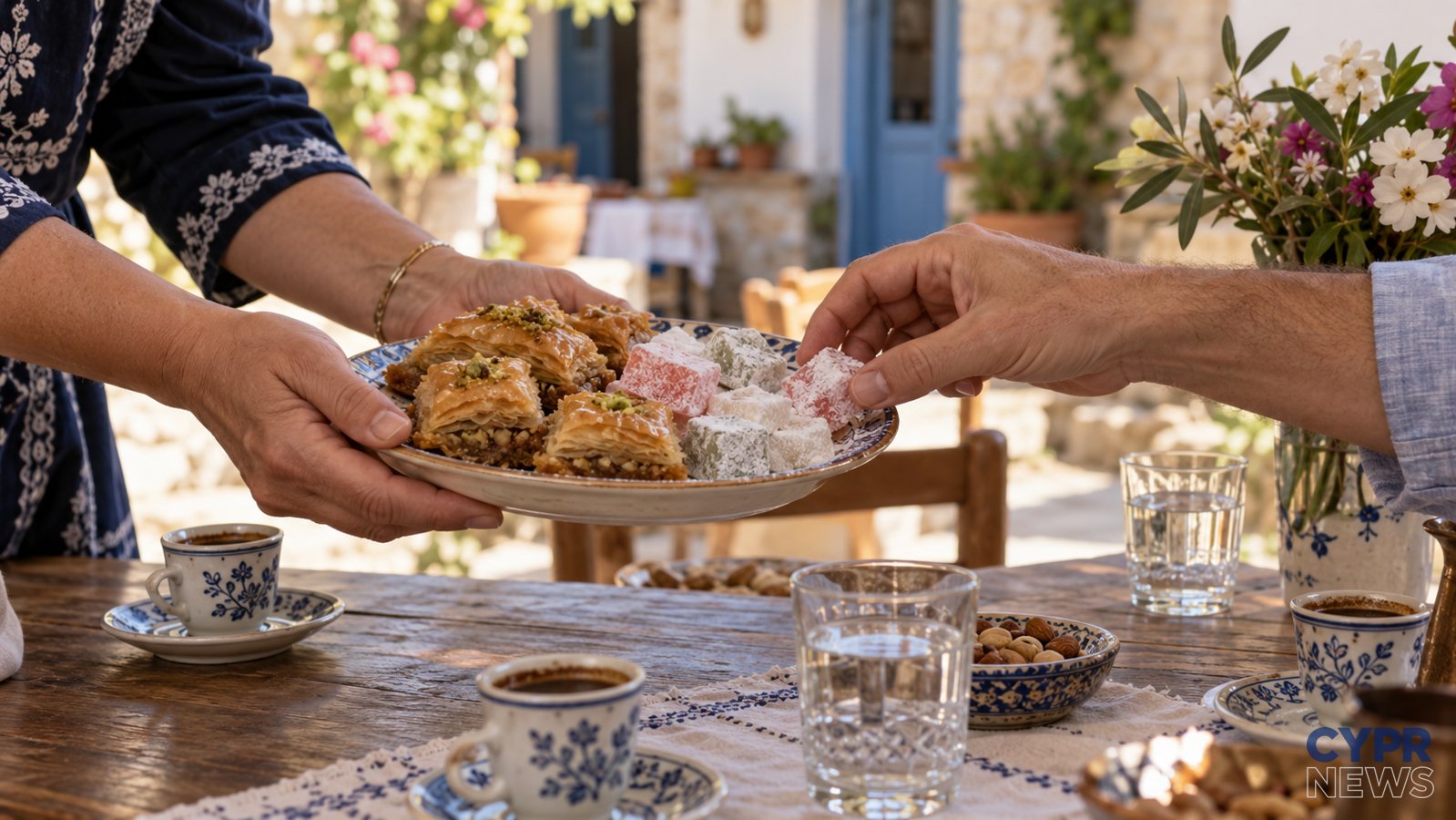
A person celebrating their name day might treat their coworkers, or a child might treat their classmates. Family celebrations are often held at home or in a restaurant.
However, this isn't a mandatory scenario. Refreshments depend on the host's resources, workplace or school policies, and how each person wishes to celebrate their holiday.
Traditional name day celebrations involve the custom of welcoming visitors with best wishes. However, this should not be treated as automatic consent to an unannounced visit.
The modern pace of life means that the host may not be home or may be planning a meeting at a different time. It's easiest to call ahead.
If invited, a small gift, flowers, or sweets will be a natural gesture. It's best to tailor your choice to the level of intimacy, rather than assuming that every celebration requires a large gift.
Not all names used in Cyprus are directly related to saints. Some originate from antiquity, while others come from abroad.
Some people choose not to celebrate their name day on that day. Others choose a family-accepted date or celebrate on All Saints' Day.
Therefore, an online list won't always answer the question of when to wish a friend. A quick "when is your name day?" will be more reliable than guessing.
For Poles, name days are not an exotic tradition. In Cyprus, it's worth noting their connection to the Orthodox calendar and the shared celebration of people with common names.
Sometimes it'll be a large family gathering, sometimes it'll be a box of sweets on a desk. You don't need to know all the patrons to find your way around—just remembering a date that's important to a specific person is enough.
Sources: Church of Cyprus, Annabelle.