Supported by



This year's rainy summer in Cyprus was one of the wettest in decades. From June to August 2026, the average rainfall was 37.6 mm, a staggering 327% of the long-term average for this period.
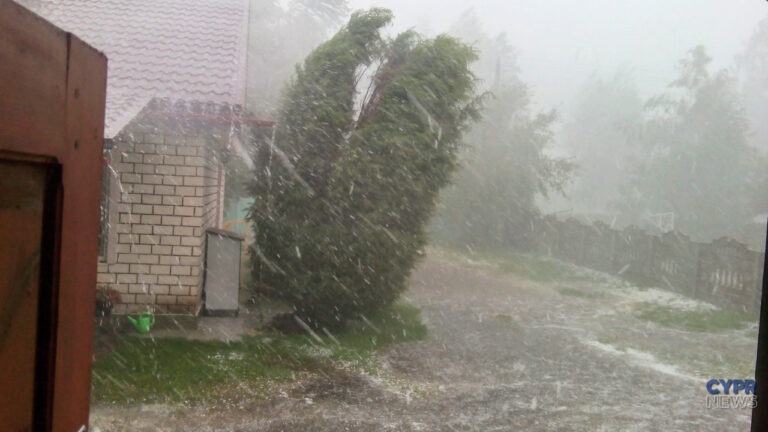
August proved to be the most unusual month. According to Kitasweather, it was the wettest August in Cyprus since 1902. Monthly rainfall exceeded 1,000% of normal, and severe storms caused local flooding and activated rivers that typically remain dry in summer.
The long-term rainfall norm for the entire Cypriot summer, calculated based on the period 1961–1990, is a mere 11.5 mm. This averages:
In 2026, the average for the three summer months reached 37.6 mm. This means that the island received more than three times as much rain as during a typical Cypriot summer.
In June, storms were mainly local in nature and occurred mainly between June 6 and 14.
The heaviest rainfall was recorded on June 12th, with 46.6 mm falling in Polystypos and 36.7 mm in Kyperounta. However, in many other parts of the island, the first month of summer remained significantly drier.
Much stronger weather instability occurred between July 5 and 8. On July 6, 59.5 mm of rain was recorded in Kampos, 41.9 mm in Mammari, and 41.5 mm in Xyliatos.
A day later, the station in Agros recorded a whopping 100.3 mm of rainfall. According to Kitasweather, this was the highest July rainfall in that town since 1976. Odou received 65.8 mm, and Agioi Vavatsinias received 57.6 mm.
Heavy rainfall caused rapid flows in rivers south of the Troodos Mountains. A short-term increase in water flow into reservoirs was also observed.
Further severe storms occurred from August 13 to 19. On August 17, 62.2 mm of rain was recorded in Makedonitissa. Local flooding occurred, and floodwaters appeared in the Pedieos River.
The next day, 63 mm of rain fell in Agros, while 58 mm fell in Agioi Vavatsinias. The rainfall occurred over a period of about an hour and also caused the Limnatis River to overflow.
The storms of August 29th had the largest impact, covering almost all of Cyprus. The highest rainfall – 68.4 mm – was recorded in the Achna area. The average daily rainfall total for the island was 22.5 mm.
Frequent rainfall in the mountains had a significant impact on local hydrological conditions. It kept the soil moist, and some rivers continued to flow well into late summer.
This may facilitate the initiation of inflows into the reservoirs when the first extensive rainfall systems appear over the island in autumn and early winter. Moist soil absorbs less water than completely dry soil.
Record summer rainfall, however, doesn't automatically solve the water shortage problem. Storms were often short-lived and localized, and the condition of reservoirs depends primarily on regular rainfall in their catchments during autumn and winter.
Sources: Kitasweather, Philenews.