Supported by


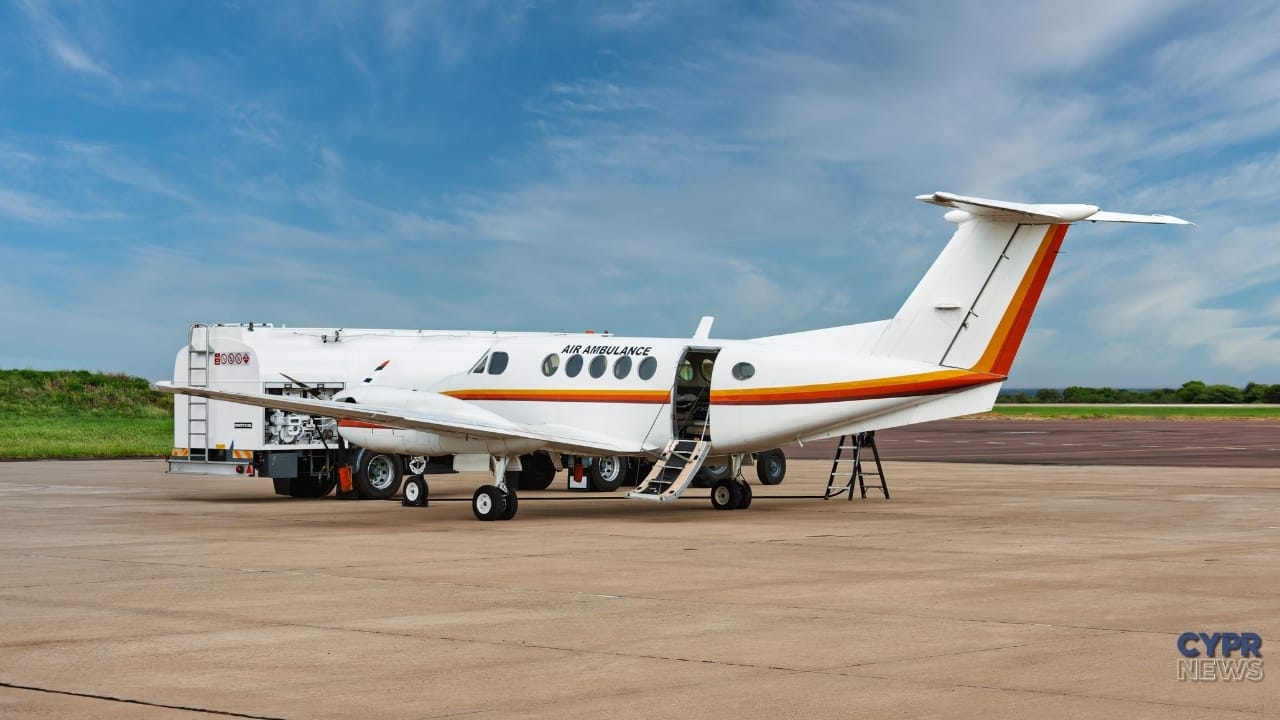
Cyprus is considering purchasing a state-owned medical aircraft to transport patients to specialized hospitals abroad. Currently, the Health Insurance Organization must use foreign companies, and the entire patient journey can take 12 to 15 hours.
The scale of the need is significant: in the first ten months of the program's operation, 100 airlifts were organized. As many as 48 involved life-threatening or urgent cases. The current system costs approximately €2.6 million per year.
On average, around ten patients each month must be transported from Cyprus to a hospital abroad by specialized medical aircraft. Their health conditions prevent them from traveling on a regular passenger flight.
At least four cases per month require rapid mobilization:
According to data from the Health Insurance Organization, 100 such transports were carried out in the first ten months of the program. In 23 cases, the patient's life was at risk, and another 25 were classified as urgent.
By October 2026, when the program's first year of operation ends, the number of flights could increase to around 120.
The biggest problem is that companies providing air medical transport services have their bases outside Cyprus.
From the moment a request is made, it takes three to four hours to prepare the aircraft, assemble the medical team, and obtain flight permits. Only then can the aircraft arrive to pick up the patient.
In total, it takes a patient 12 to 15 hours to reach a hospital abroad. In some cases, this time exceeds the medically acceptable limits.
Situations involving transplants or procedures that must be performed within a strictly defined timeframe are particularly challenging. According to representatives of patient organizations, one patient lost the opportunity for a transplant precisely because of the delay caused by distance.
President Nikos Christodoulides and the Minister of Health have already held meetings with the Cypriot Emergency Medical Service. The service is expected to prepare analyses and procedures that could lead to the purchase of a state-owned medical aircraft.
The project is intended to be linked to the planned launch of the National Emergency Medical Services Authority. According to current plans, the project is scheduled for further development in 2027.
Financing the purchase is being considered from funds Cyprus will receive under the European Union budget for 2028–2035. However, the type of aircraft, its expected price, and the launch date have not been announced at this stage.
The Cypriot Federation of Patients' Associations OSAP argues that its own aircraft should be part of the state rescue system.
Its president, Miltos Miltiadous, points out that Cyprus is an island, so in case of emergency it should not be completely dependent on machines, personnel and permits organized in other countries.
According to current estimates, the cost of maintaining its own facilities should not significantly exceed the €2.6 million that the Health Insurance Organization spends annually on purchasing services from foreign companies. However, the exact calculations have not yet been publicly disclosed.
The purchase of the aircraft has not yet been finalized. The government is awaiting analyses and specific proposals that will demonstrate the costs, crew organization, and the feasibility of maintaining the aircraft at constant readiness.
Source: Philenews.