Supported by


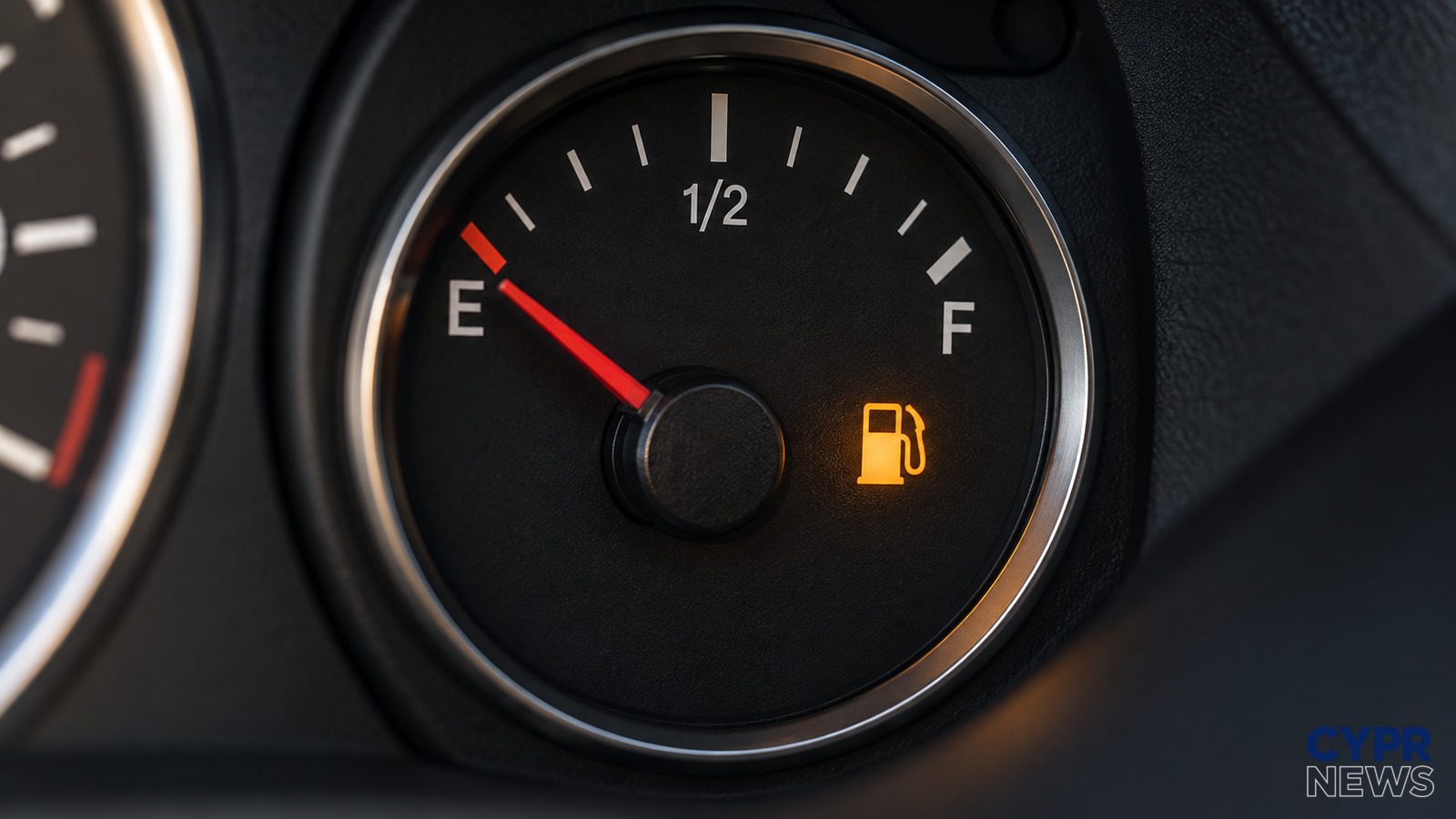
Fuel prices in Cyprus mean that the same budget will cover a much shorter distance than a year ago. At the October rates and the specified fuel consumption, €70 would save you about 147 km in a petrol car or 201 km in a diesel car.
Maintaining the same number of trips in this example means an increase in weekly expenses to around €90 for petrol or €98 for diesel. At the same time, official data for the first nine months of 2026 does not show a significant decline in fuel sales at stations. However, this is not a direct measure of driver journeys.
Philenews compared October prices for 95-octane gasoline and diesel with levels from a year ago. Gasoline prices rose from €1.340 to €1.728 per liter, an increase of about 29%. Diesel rose from €1.428 to €2.004, an increase of about 40.3%.
These are values used for comparison purposes, not a uniform price list for all stations or a confirmed average for the entire month of October. The bill at the pump depends on the specific location and day of refueling.
The scale of the change is clearly demonstrated by a fixed budget. If a driver spends €70 on fuel, they now buy fewer liters. With unchanged fuel consumption, this also translates to fewer kilometers.
The calculations assume fuel consumption of 8 liters per 100 km for a petrol car and 7 liters for a diesel. These are examples, not an average for all cars on the island.
The increase in fuel price and the decrease in distance for the same amount have different percentages. In this example, a 29% increase in gasoline price means approximately 22.5% fewer kilometers. There's no contradiction here: as the price increases, the number of liters that can be purchased for a fixed amount decreases.
If last year's €70 was the weekly cost, maintaining the same routes would now cost around €90.27 for petrol or €98.24 for diesel.
The supplement for four weeks is therefore approximately €81 or €113. However, four weeks is not a full average calendar month.
If both compared price levels were maintained for 52 weeks, the additional cost would be approximately €1,054 for petrol and €1,468 for diesel. This is a one-year simulation, not a fixed driver bill for 2026. It cannot be assumed that October prices were valid for the entire year or will remain unchanged.
Actual usage will be lower or higher depending on mileage. This example applies to intensive use: last year, €70 a week would allow you to travel approximately 650–700 km.
CYSTAT data confirms that from January to September 2026, unleaded petrol sales at stations increased by 2.2% compared to the same period in 2025. Diesel fuel sales decreased by only 0.3%.
This refers to the volume of fuel sold, measured in tons, not the value of invoices. Therefore, the statistics do not indicate a significant reduction in petrol and diesel purchases in this segment of the market.
However, they don't allow us to conclude that every resident is driving the same amount as before. The results include purchases by various users, including businesses and tourists. They also don't directly reflect the number of trips or kilometers traveled by households.
Furthermore, the data ends in September. It does not measure drivers' reactions to the October comparison prices.
For residents commuting to work daily and parents dropping off their children, the most important factor remains the cost of those same, necessary trips. With fuel consumption remaining constant, the price difference translates directly into higher expenses.
Comparing nearby stations can reduce your bill. However, it's worth factoring in the cost of travel: extra miles driven solely for cheaper fuel can eat into some of the savings.
Sources: Philenews, CYSTAT, CYPRNews. Own calculations based on prices quoted by Philenews.