Supported by


Packs of feral dogs are attacking protected Cypriot mouflons in the Paphos forest. The most severe situation is in the areas adjacent to the buffer zone, from Orkontas to Kato Pyrgos Tyllirias. Authorities admit that the problem has been ongoing for years and is escalating.
Dogs not only kill animals but also scare away herds and disrupt their activities. An additional cause for concern is the reported cases of echinococcosis parasites in the area. Authorities point to difficulties in trapping packs that move between the forest and areas outside the control of the Republic of Cyprus.
The case again attracted media attention after the publication of a video by naturalist Georgios Papapetrou. In the Orkontas region, opposite Lefka, he came across a dead adult male mouflon and dogs that, according to him, were involved in the attack.
Papapetrou has been documenting similar incidents for over 15 years. He describes how packs can chase mouflon for extended periods, exhausting them, and then surround and attack them.
So it is not about a single encounter between a dog and a wild animal, but about repeated hunts by entire groups. The cause of death of a found mouflon can be assessed, among other things, based on injuries and traces left at the scene.
Nikos Kassinis, a representative of the Game and Wildlife Service, confirmed that fatal attacks are occurring in various parts of the Paphos Forest. The strip of land adjacent to the buffer zone, between Lefka and Kato Pyrgos Tyllirias, is particularly problematic.
Authorities identify the Xeros, Kampos, and Limnitis river valleys as routes through which the dogs enter the forest. After attacks, they may retreat to areas outside the control of the Cypriot authorities, making interventions more difficult.
Residents of Kampos and nearby towns have repeatedly reported seeing packs of dogs chasing wild animals. Packs have also been spotted near residential areas.
Direct attacks are the most visible consequence of dogs' presence. However, they do not exhaust the problem.
Chases disperse herds and force mouflon to abandon their feeding and resting areas. In autumn, during the mating season, such disruptions can further hinder the animals' ability to reproduce.
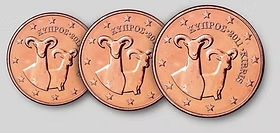
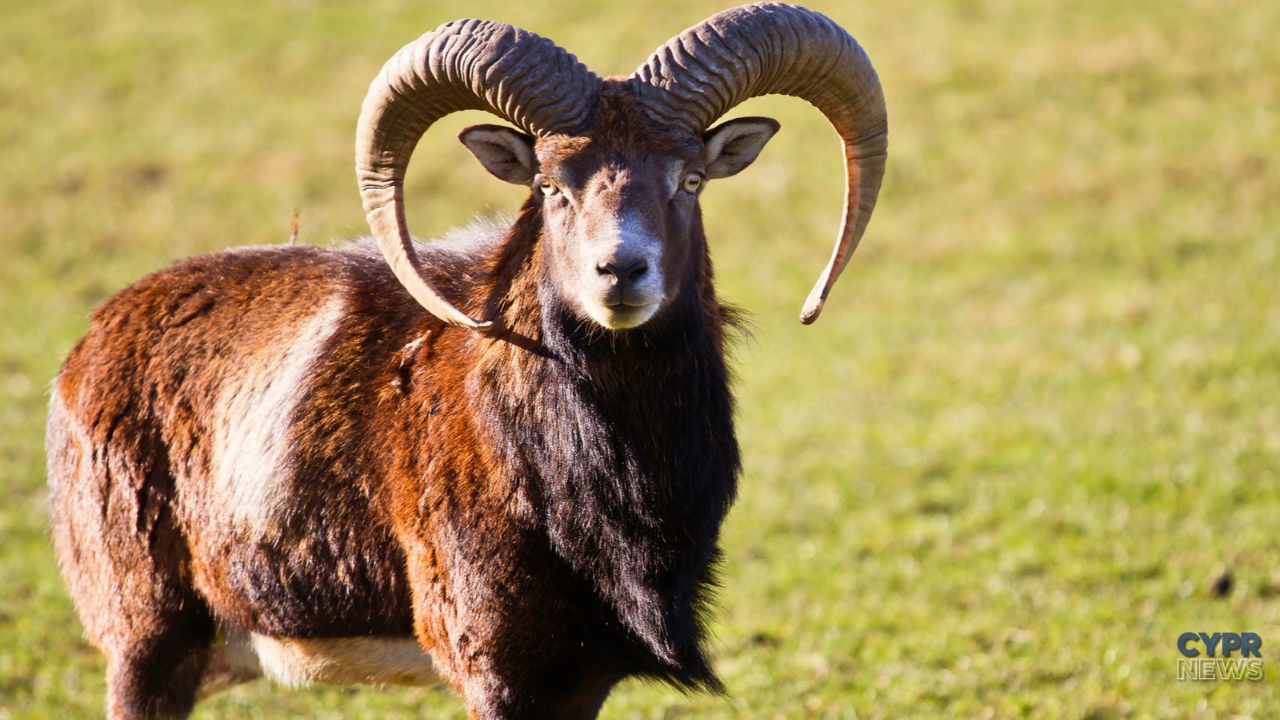
Cypriot mouflon, called in Greek agrino, is an endemic subspecies of wild sheep. It is found exclusively on the island and is strictly protected. Its image appears on Cypriot 1, 2, and 5 cent coins.
Infections with parasites causing echinococcosis have been reported among mouflon from areas adjacent to the buffer zone. Their presence was also previously confirmed in some dogs collected in the Kampos region.
This is an additional argument for monitoring animal health and limiting the presence of stray dogs in the forest. However, it does not mean that every dog encountered is infected.
The Hunting and Wildlife Service collaborates with veterinarians to examine dead and captured mouflon. Such studies allow for the assessment of both the cause of death and the threat to the remaining population.
Human responsibility also contributes to the pack problem. Abandoned dogs can lose contact with humans, form groups, and rely on hunting for food.
Trapping animals in the forest does not address the causes of this phenomenon. Identifying dogs and their owners, preventing abandonment, controlling breeding, and enforcing animal welfare regulations are also important.
The protection of mouflons and the responsible care of dogs are directly related. Abandoning an animal can have consequences far beyond the place where it is left – including for the protected wildlife of Paphos Forest.
Sources: Politis, Philenews, Game and Wildlife Service, Cyprus News Agency.