Supported by


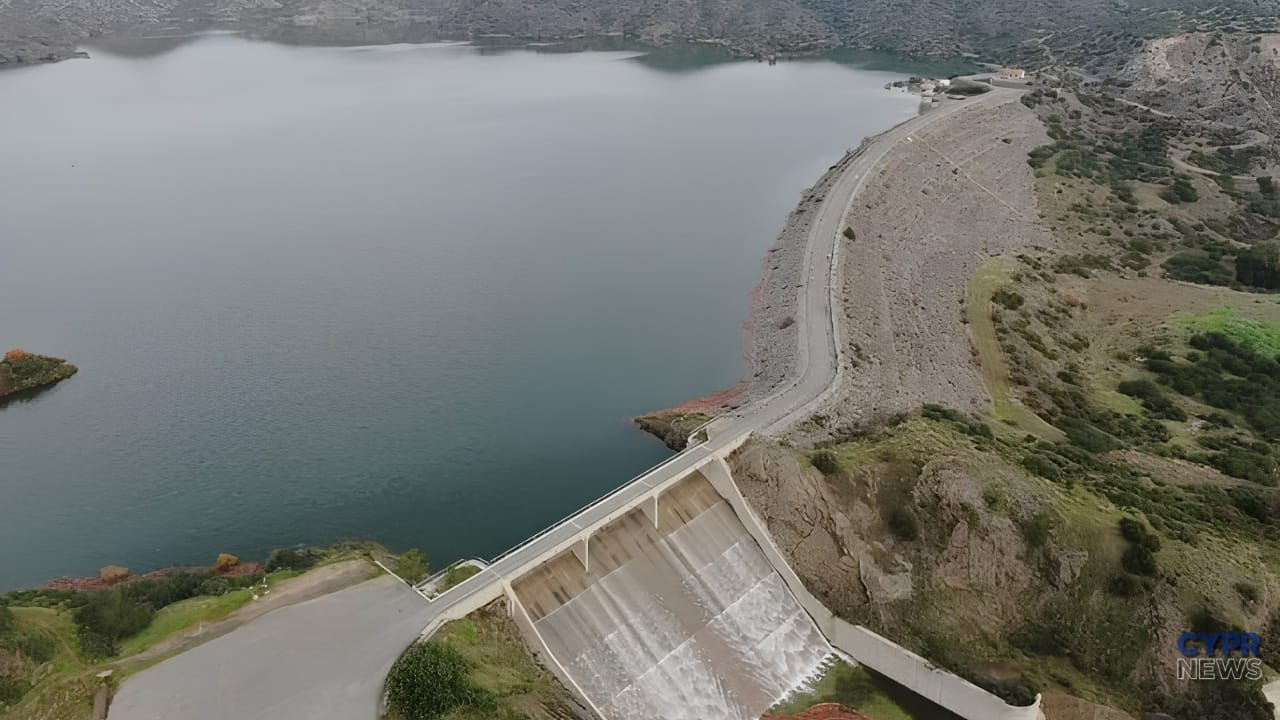
The total capacity of dams in the Paphos region has increased to 40.6%, up from 17.8% at this time last year. The best situation is observed in the smaller Argaka, Pomos, and Agia Marina Chrysochous reservoirs, which are over 80% full.
The latest report does not yet fully account for water from recent heavy rainfall. Despite the significant improvement, authorities emphasize that the current level of reserves does not fully meet the needs of residents and agriculture.
According to the latest data from the Department of Water Development, the dams in the Paphos region are currently 40.6% full.
In the same period in 2025, the occupancy rate was only 17.8 percent. This means that the current figure is approximately 2.3 times higher.
In some reservoirs, the difference is much greater. The most noticeable changes were recorded in Argaka, Pomos, and Agia Marina Chrysochous.
The data is from earlier this week and doesn't yet capture the full impact of recent rainfall. Water runoff from mountainous areas may be delayed in reaching dams, so levels may continue to rise.
Asprokremmos, the second largest dam in Cyprus, is currently 40.3 percent full, up from 17.4 percent a year ago.
The reservoir is crucial to the Paphos region. It is used to store water for, among other things, municipal supplies and irrigation.
Despite improvements, the Asprokremmos is still not even half full. The reservoir's large capacity also means that raising its level by a few percentage points requires significantly more water than is required by smaller dams.
The situation is best in three smaller reservoirs located in the northern part of the region.
Agia Marina Chrysochous is 86.2% full, Pomos 85.8% full and Argaka 81.9%.
A year earlier, the levels were 20.5%, 23.8%, and 16.3%, respectively. In Argaki's case, the current figure is therefore approximately five times higher than a year ago.
In the remaining reservoirs the situation is as follows:
Mavrokolympos is currently 69.2% full. However, a comparison with last year requires further explanation.
In 2025, the reservoir was at 0% capacity due to a failure and the need to empty the dam. This doesn't mean that the increase to the current level is solely due to increased rainfall.
After infrastructure repairs, Mavrokolympos is once again able to store water. Its current level improves the region's overall situation, but directly comparing it to last year's zero level can be misleading.
Check which dams are best filled and why Achna remains at the bottom of the list.
CHECK THE DATA FOR THE WHOLE ISLANDThe summary does not yet fully include water from recent heavy rainfall. However, not every drop of rain ends up directly in reservoirs.
The location of rainfall, soil moisture, and whether rain fell in the catchment areas leading to specific dams are all important factors. Some water is retained in the soil, while some flows into the sea.
The impact of recent rainfall will only be more accurately assessed after further measurements by the Department of Water Management Development.
The current data is clearly better than last year, but it does not solve the problem of the region's water supply.
The largest reservoirs are still not even half full. At the same time, water is needed by residents and the tourism industry, as well as by farmers who use it to irrigate crops.
The Paphos region also benefits from seawater desalination. Desalination plants already meet approximately half of its annual drinking water needs. However, dams remain an important component of the overall system, particularly for agriculture.
We explain how Cypriot desalination plants work and why dams alone are not enough to supply the island.
FIND OUT MOREAuthorities continue to urge rational use of resources. Fuller reservoirs provide a greater margin of safety, but one better season won't be enough to reverse the effects of repeated droughts.
Sources: Department of Water Management Development, Philenews