Skip to content
Supported by


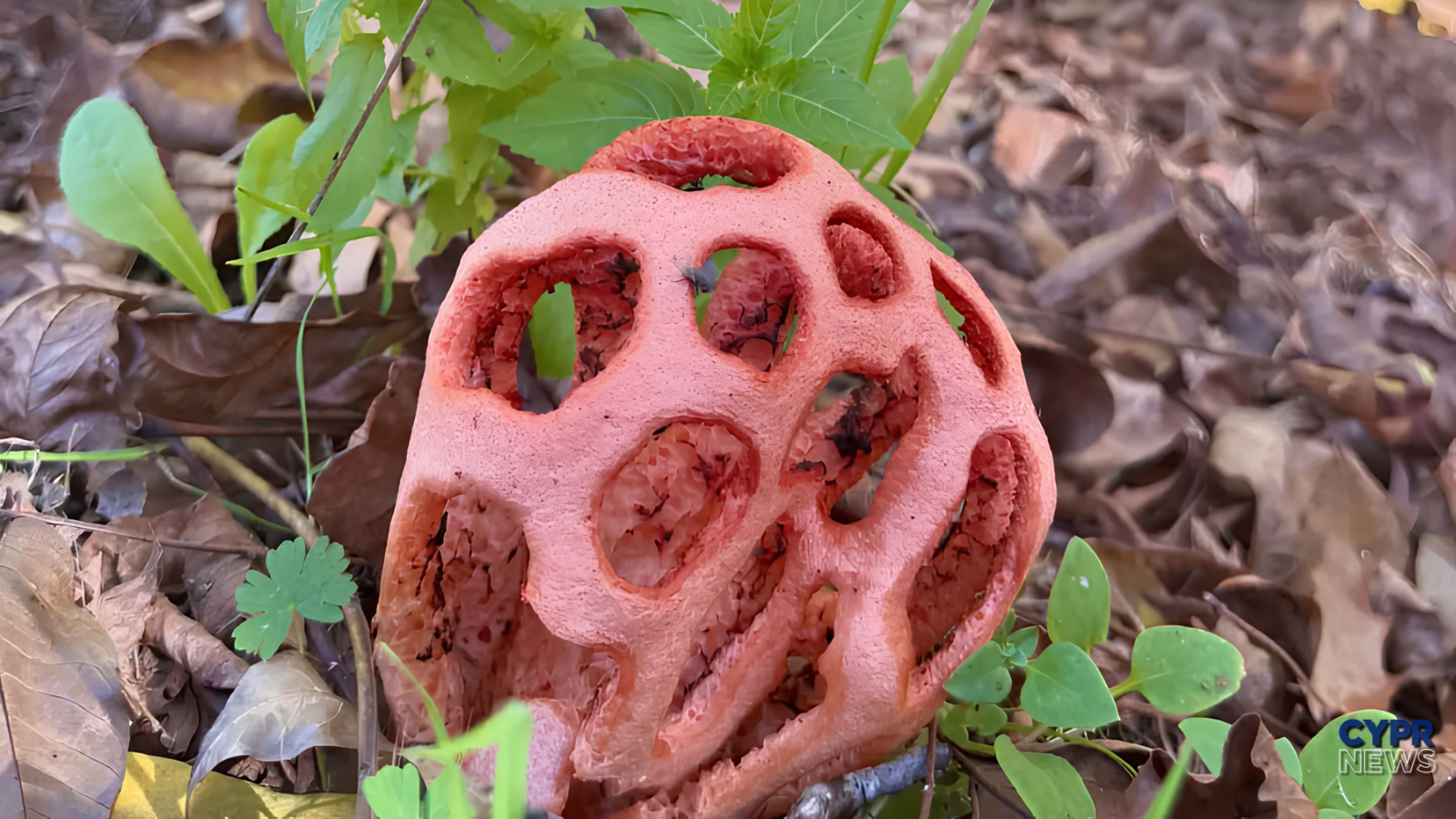
A red, openwork ball growing from the ground looks more like a decoration than a mushroom. And yet—just such a specimen has been observed in the Paphos Forest. It's a red crassula, or Clathrus ruber, photos of which were provided by the Cyprus Forest Department.
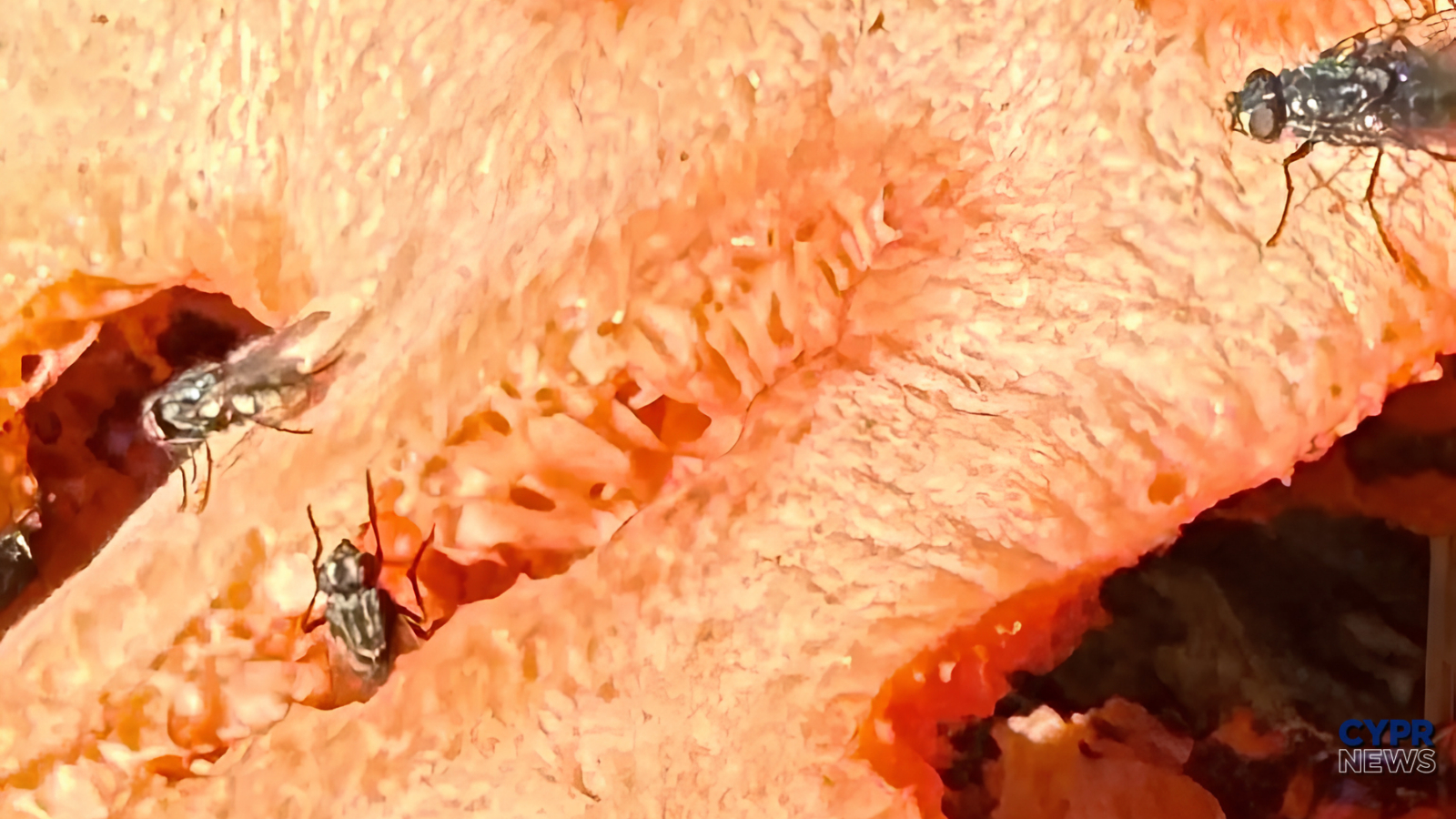
Its appearance is eye-catching, but its scent doesn't exactly encourage approaching. For the fungus, this is an advantage: the unpleasant odor attracts flies, which help it disperse its spores.
Initially, it's difficult to discern the resemblance to the red cage. The young fruiting body resembles a white or grayish egg. Only when mature does its shell split open, revealing the characteristic, three-dimensional lattice.
Mycelium grows underground, utilizing decaying organic matter. The fruiting body visible on the surface is the part of the fungus that produces and disperses spores.
Nature up close
The close-up shows flies attracted to the mushroom's scent. These flies help spread its spores to other locations.
Photo: Cyprus Forest Department · Click on image to enlarge.
On the inside of the red lattice is a sticky mass containing spores. This produces an intense odor that attracts flies and other insects.
Upon arriving at the fungus, insects come into contact with this mass. They then carry the spores to other locations. The smell that repels the walker is therefore an effective way for the spider to spread.
Although it looks exotic, the red crassula also occurs in Poland, where it is rarely encountered. The species is known from the Mediterranean region, but it also occurs in many other parts of the world.
It is an inedible mushroom. Encountering it is best treated as an opportunity to take a photo and admire its unusual structure. It's worth leaving it where it grew—along with the flies that have their own business around it.
Sources: Cyprus Forest Department, State Forests - "Mushrooms of Polish Forests".