Supported by


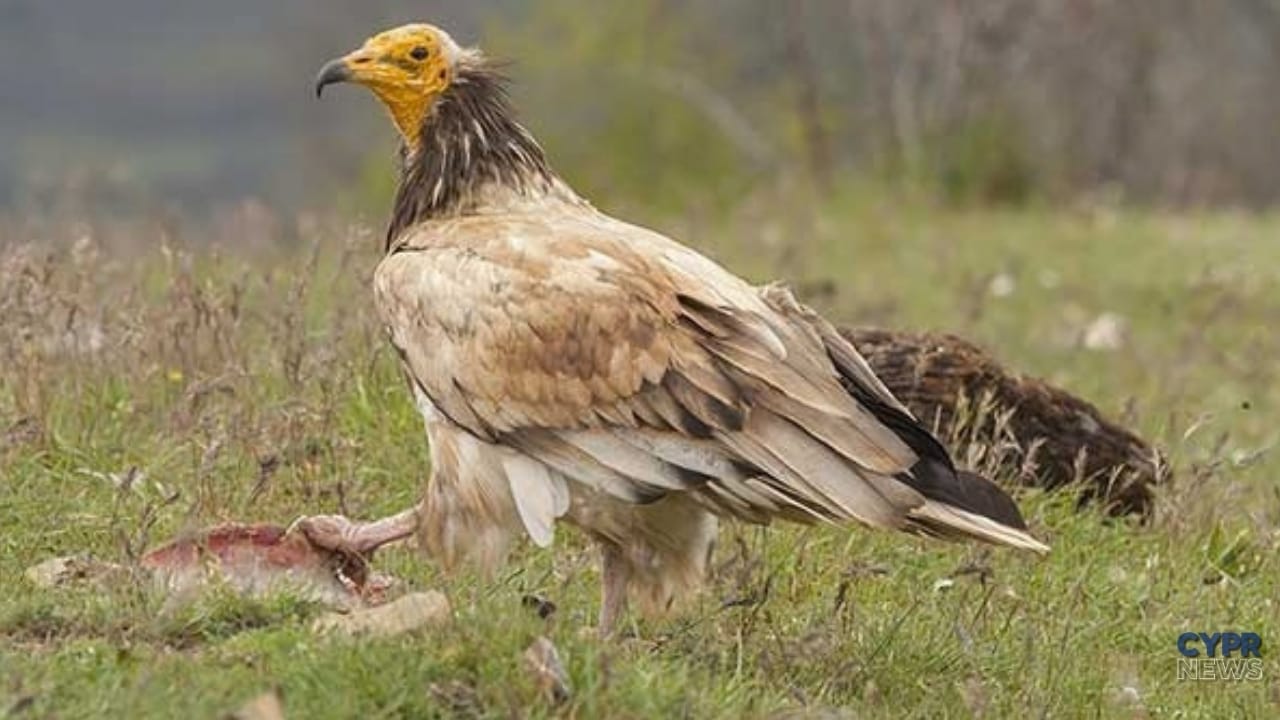
The rare Egyptian vulture, also known as the Egyptian vulture, was recorded at a vulture feeding station run by the Forestry Department in Agios Ioannis, Paphos. The bird was spotted and filmed by a Forestry Department employee and naturalist Georgios Papapetrou.
The appearance of this species on the island is a rare and hopeful event. However, it does not mean that the bird has settled or begun nesting here. Cyprus was most likely a safe stopover for it during its autumn migration from Europe to Africa.
The Egyptian Vulture, whose scientific name is Neophron percnopterus, is the smallest of the European vultures. Adults can be recognized by their pale, almost white plumage, black wingtips, and distinctive yellow, featherless head.
This species is one of the few vultures to undertake long-distance migrations. Birds nesting in Europe migrate through the Middle East towards Africa in the autumn. Some travel over 6,000 kilometers, crossing three continents.
Cyprus's location allows migrating birds to rest and refuel before continuing their flight. For the Egyptian vulture, every safe stop is especially important, as the species is threatened with extinction.
A video released today shows a bird using a feeding station in the Paphos region. The footage offers a closer look at one of the rarest vultures to appear on the island.
An Egyptian vulture stopped at a feeding station in Agios Ioannis during its long migration towards Africa.
OPEN THE VIDEO ON FACEBOOKThe bird appeared at the Forestry Department's feeding station in Agios Ioannis. The facility has been operating continuously since 1992 and was the first initiative of its kind on the island.
The collection point receives pre-inspected carcasses that contain no poisons or other substances harmful to birds. This allows the vultures to find food without the risk of poisoning.
The Forestry Department describes this site as a refuge and "lifeline" for both Cyprus' resident griffon vultures and weary migratory birds. The appearance of an Egyptian vulture demonstrates that the point is also used by rare visitors.
The Egyptian vulture population has been declining rapidly in recent decades. According to data from European conservation projects, the bird's numbers in the Balkans have fallen by more than 80 percent in the past 30 years.
The most serious threats include poisoning, poaching, and electrocution from unsecured power poles and lines. Dangers await birds both in their breeding grounds and along their thousands of kilometers of migratory routes.
Vultures play an important role in nature. By removing carrion, they reduce the risk of disease spreading and help maintain ecosystem balance.
Egyptian vultures are also exceptionally intelligent. They are among the few birds that use tools, capable of using stones to crack the hard shells of their eggs.
It's unknown how long the Egyptian vulture remained in the Paphos area or where exactly it came from. However, the Forestry Department emphasizes that its presence is a positive sign for ongoing conservation efforts.
For the bird, Agios Ioannis was likely just a brief stopover on its way to Africa. For naturalists, its arrival is proof that safe feeding stations can support not only the local vulture population but also species traversing one of the world's most challenging migration routes.
Sources: Department of Forestry of the Republic of Cyprus, Cyprus Mail, SigmaLive, BirdLife International, European Commission