Skip to content
Supported by


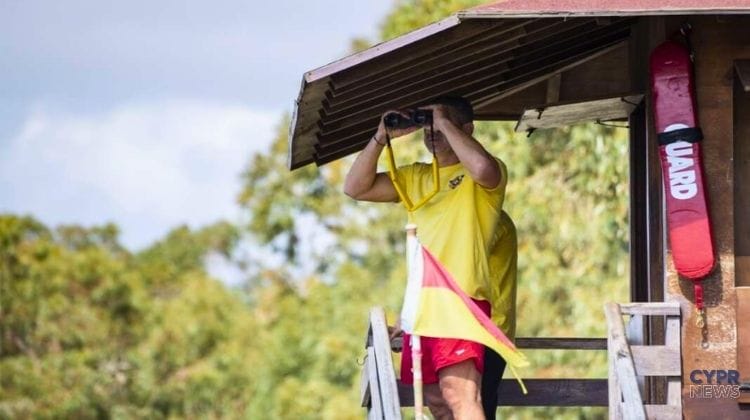
Rescuers in Cyprus are grappling with a problem that has been recurring for years. During the peak season, some beach towers remain closed, while others close when many people are still at the seaside. Staff shortages have once again become a topic of discussion following the tragic and dangerous events of recent days.
The scale of the problem is large. In the Larnaca district, only 10 of 19 towers, in Paphos remains closed 8 of 33, and in the Famagusta region, seven smaller beaches are not permanently staffed. Service representatives emphasize that the problem is not a lack of approved sites or funding, but rather a decreasing interest in lifeguarding.
The most telling data comes from Larnaca.
The entire district is currently working 31 rescuers – 11 permanent and 20 temporary employeesMeanwhile, 44 positions for seasonal lifeguards have been approved. Less than half of them have been filled.
According to Savvas Ioannou, head of beaches at the Larnaca District Administration, funding for employment is available. The problem is that there are not enough people who meet the requirements and are interested in taking up the job.
As a result, of the 19 existing towers, only 10 are currently operational.
There are three towers on Finikoudes, three on Mackenzie, and one each on Psarolimano–Kastella, at Periptero Oroklinis, Chrysopsaro Oroklinis and on the KOT beach in Pyli.
However, the range of hours varies greatly.
On Finikoudes rescuers work from 7:00 to 20:00On Mackenzie, one tower operates from 7:00 a.m. to 7:00 p.m., while the other two operate from 10:30 a.m. to 6:00 p.m.
On the KOT beach in Pyli, Chrysopsaro, Periptero Oroklinis and Psarolimano–Kastella, protection is in force from 10:30 to 18:00.
According to Savvas Ioannou, the recent tragic incident at KOT beach took place outside lifeguard working hours.
A similar situation occurs in the Paphos district.
There are 33 rescue towers there, but they are currently operational 25 of themEight remain closed due to staff shortages.
There are 104 approved lifeguard positions, and 82 people have been hired. Among them, eight are permanent employees, 53 are hired for eight months, 19 for six months, and one person each for four and three months.
The acting head of the Paphos district, Froso Georgiou, openly admits that the administration is having trouble finding candidates.
He emphasizes that the level of people already working on the beaches is high. The problem remains their number.
In the part of Famagusta district controlled by the Republic of Cyprus, there are 30 towers, where a total of 86 rescuers work.
Seven smaller beaches remain unmanned: Pagida in Sotira, Loukkos tou Manti and Katsarka in Ayia Napa, and Glyky Nero, Sirena, Nisia, and Mima Rosa in Paralimni.
This year, however, a particularly disturbing signal has emerged – not a single new lifeguard was hired, and at the same time two or three people left their jobs.
Basic tower operating hours in this area are 9:30 a.m.–5:00 p.m. In June, July, August, and September, some beaches have extended operating hours until 6:30 p.m.
However, this is not possible everywhere due to employment conditions and overtime limits.
Four popular beaches have much longer protection.
Makronissos and Pantachou 1 in Ayia Napa and Kapparis and Vrysi 2 in Protaras are staffed by lifeguards during the season from 7:00 to 18:30.
This shows how big differences can exist even between beaches in the same region.
The presence of a lifeguard tower does not automatically mean that a lifeguard will be on site all day.
The president of the Pan-Cypriot Water Rescue Federation, Polys Pallikaros, believes that one of the main problems is the way lifeguards are employed.
Ten-, eight-, five-, four- and even three-month contracts are offered.
In his opinion, it is difficult to expect a qualified person to give up permanent employment for a job that is only available for a few months a year.
The federation proposes increasing the number of eight- and ten-month contracts and creating more permanent positions.
The problem is well illustrated by the example of Famagusta. According to the local administration, the starting salary of a lifeguard there is approximately 1560 euros net per month, with the possibility of additional earnings for overtime. Despite this, there are no new candidates.
Polys Pallikaros emphasizes the importance of the very presence of lifeguards on beaches.
According to him, where professional rescuers are in place, the number of drownings is almost zero. In recent days, rescuers have carried out several successful operations, including saving a child in Paphos and a couple in distress in Limassol.
The Federation also notes that most towers close around 6:00 PM. Only on some beaches does security last longer.
According to the organization, extending working hours requires additional financial incentives and discussions with the rescuers themselves.
The federation says it has been reporting staff shortages and working hours to the authorities for many years.
Earlier this summer, the organization also reached out to identify unemployed, qualified rescuers, train them, and evaluate candidates. According to Pallikaros, the organization has not received a response.
Rescuers also want residents and tourists to have easy access to information about which beaches are protected and at what times.
The Federation also highlights the need for further improvements in equipment. Access to jet skis is particularly important, as they allow for much faster access to a person in distress.
After a series of events in recent days, the discussion returns to the same question: how to ensure a sufficient number of lifeguards at a time when Cypriot beaches are experiencing their busiest time of the year.
Source: Philenews / Cyprus News Agency (KYPE)