Skip to content
Supported by


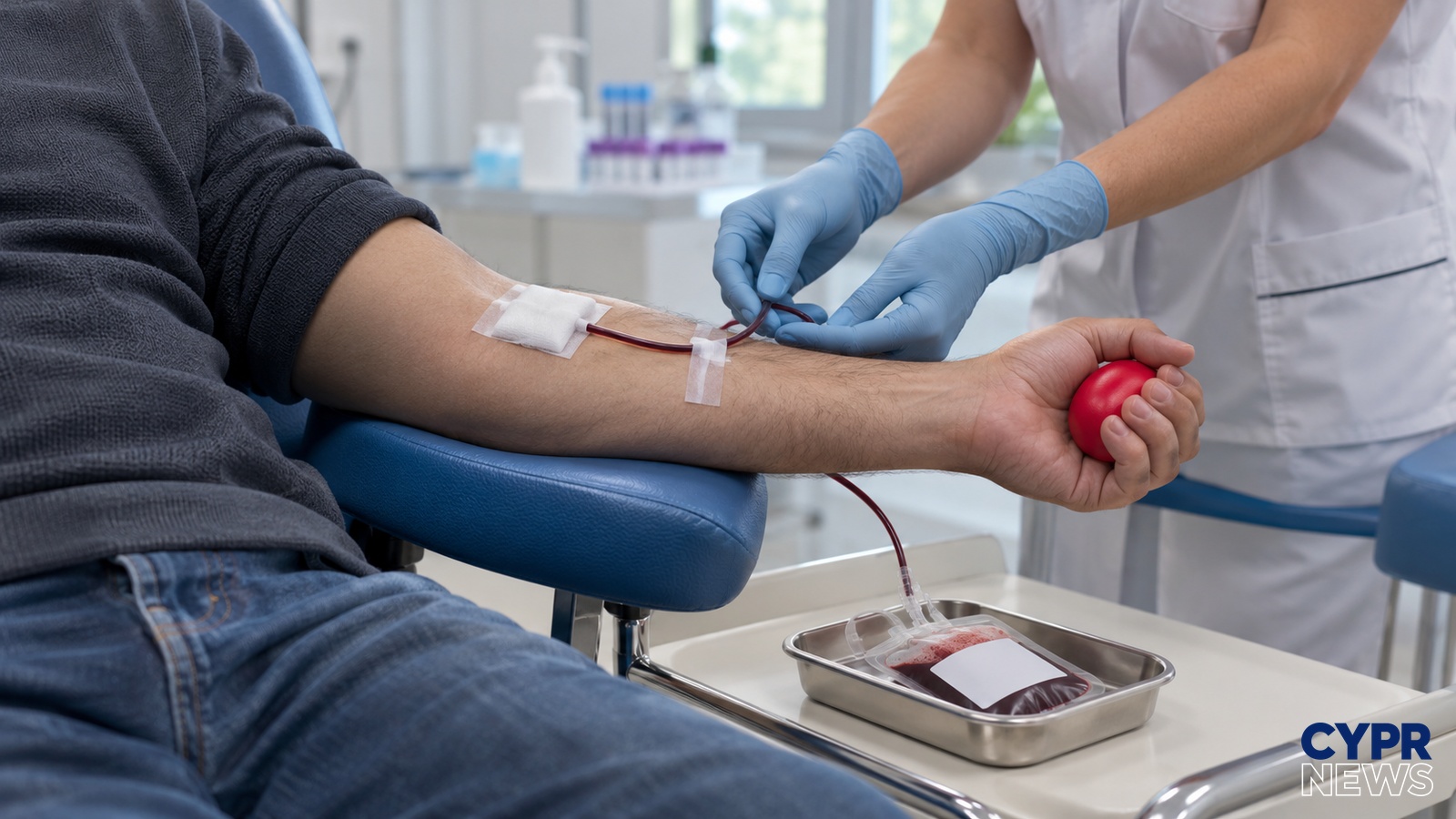
The Ministry of Health wants to encourage companies and their employees to participate in organized blood donation drives. The goal is to increase the number of regular donors and ensure a stable supply for patients who need transfusions.
Polish readers may associate blood donation with time off work and chocolate. Such support still exists in Poland—currently, employees are entitled to paid time off on the day of donation and the following day. The Cypriot announcement, however, concerns cooperation with employers and does not include information about the introduction of similar benefits.
Health Minister Neophytos Charalambides presented the plans on Saturday, November 14, during a conference on thalassemia in Paphos. He appealed to businesses and employees to support the initiative, which is being developed in conjunction with relevant institutions and organizations.
The activities are intended to encourage participation in organized collections. The ministry aims to increase the number of people donating blood regularly, which will help meet patient needs even between urgent appeals.
This is especially important for people with thalassemia who require repeated transfusions. The minister emphasized that they should be able to lead lives without the uncertainty of another blood transfusion.
The memory of a day off and chocolates is therefore well-founded, although current Polish regulations provide for a broader leave of absence from work. This includes the day of donation and the day immediately following it, while retaining the right to remuneration.
However, this does not mean two freely chosen working days. The leave is tied to specific dates, not the possibility of taking time off at a later date.
In the Polish system, donor support covers both the time needed for donation and rest, as well as a recovery meal. This is a concrete example of a solution that facilitates combining blood donation with professional responsibilities.
In the case of the Cypriot initiative, the minister announced that employees would be encouraged to participate in fundraisers. However, he did not provide details regarding sick leave or the benefits package for participants. Therefore, at this stage, there is no basis for announcing to employees the same rules as in Poland.
Thalassemia is an inherited blood disorder that disrupts the production of hemoglobin, the protein responsible for transporting oxygen throughout the body. In severe cases, patients require regular transfusions.
Cyprus is one of the countries where the genetic variation associated with thalassaemia is common. According to estimates cited by the Cyprus Mail, it affects approximately 15% of the population, with approximately 650 people living with the condition.
However, carrier status should not be equated with a condition requiring blood transfusion. Transfusion requirements depend on the form and severity of the thalassemia.
We've previously described problems with blood availability. In October, further appeals for donors appeared, and patient representatives reported postponed transfusions.
The initiative, aimed at companies, comes after the government adopted a national blood strategy. The Council of Ministers approved it on November 4.
The strategy covers, among other things, inventory and demand management, service organization, quality and supervision, and digitalization. Its implementation will be monitored by a special committee.
During Saturday's conference, the minister also spoke about progress in the treatment of thalassemia. He emphasized that the state's role is to assess the feasibility of safely incorporating new therapies into care and ensuring access to those who need them.
He also emphasized the importance of psychological and social support. Patients and their families should receive reliable information about available treatment options so they can participate in informed decision-making.
Ensuring an adequate blood supply remains the foundation of this care. The announced partnerships with companies will help build a larger group of regular donors who can be counted on year-round.