Supported by


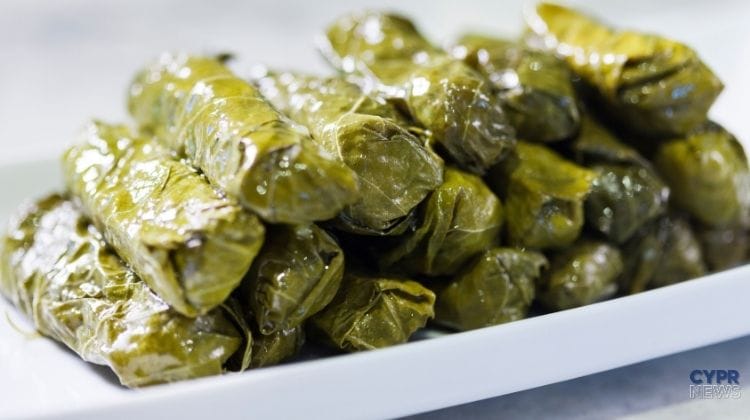
Recipe for koupepia is one of those that immediately brings to mind cabbage rolls for Poles. And indeed, the principle is similar. However, vine leaves are used instead of cabbage, and the filling most often consists of meat, rice, tomatoes, and herbs.
In Cyprus, koupepia are much more than just a taverna appetizer. They're a typical home-cooked dish, also appearing at weddings and family celebrations. Official tourist information lists them as one of the classic elements of a Cypriot meze.
Outside Cyprus, all stuffed vine leaves are often lumped together under the name dolmades.
However, the Cypriot version has its own character.
It appears very often in traditional recipes ground pork, rice, fresh tomatoes, onion, parsley and mintSome recipes also include a pinch of cinnamon.
And just like with kleftiko, proportions and details can vary between families.
Some add more tomato, others a stronger mint flavor. For some, cinnamon is a must, for others, not so much.
Traditionally, fresh, young leaves picked from the vine were particularly valued.
They are more delicate and easier to roll. Visit Cyprus points out that koupepia are especially delicious when prepared with young spring leaves.
This does not mean, however, that you have to have your own vineyard.
You can also use jarred or brined leaves for this recipe. Just rinse them thoroughly to remove excess salt.
The final ingredient can be adjusted to suit your taste. Cinnamon appears in many traditional recipes, including the official Cypriot culinary publication, but it's not present in all modern versions.
If using fresh leaves, remove the tough stalks.
Then briefly immerse them in boiling water. They don't need to be cooked for long—they should just soften and become pliable.
After removing them, place them on a strainer and leave to cool.
It is usually enough to rinse the leaves from the jar well.
Chop the onion very finely and sauté in olive oil.
Add the ground pork and fry for a few minutes. Then add the grated tomatoes.
The meat is later supplemented with:
Do not cook the stuffing until completely soft.
The rice will finish cooking inside the vine leaves. The official Visit Cyprus recipe also calls for only pre-cooking the filling before rolling.
Place the leaf on the board veins up.
Place a small teaspoon of filling near where the tail was.
Then:
A small package resembling a short cigar should form.
Don't put too much stuffing in.
Rice will expand during cooking, so if rolled too tightly, the koupepia may burst.
Place a few unused or damaged vine leaves on the bottom of a wide pot.
Only then place the koupepia on top of them – tightly next to each other, with the folded part facing down.
Once the first layer is created, the next one can be laid.
Tight packing is important because the packets should not move freely around the pot during cooking.
This is one of the most characteristic stages of preparation.
Place the koupepia on the arranged ones inverted platewhich fits inside the pot.
Its purpose is to press down on the rolled leaves to prevent them from unraveling during cooking. This method appears in both Visit Cyprus recipes and official publications on traditional cuisine.
Add olive oil, remaining lemon juice, and enough water to bring the liquid to about the level of the koupepia.
Cover the pot and bring to a gentle boil.
Then reduce the heat.
Depending on the size of the packets and the type of rice, cooking usually takes about 30–40 minutesOfficial recipes range from about 20 to 40 minutes, so the best test is the softness of the rice.
After turning off the heat, it is worth leaving them in the pot for a few minutes.
Don't try to remove all of them at once – the leaves are very delicate right after cooking.
And here's the good news: both answers are correct.
Koupepia can be served warm as part of a dinner or meze.
They also taste very good when cooled, especially with:
The official publication of Cypriot traditional dishes indicates that they can be served both warm and at room temperature.
If there is stuffing left over, nothing is wasted.
In Cyprus, vegetables are also stuffed with a similar mixture – tomatoes, peppers, zucchini and other seasonal products.
Visit Cyprus clearly states that the stuffing used for koupepia can also be used to prepare stuffed vegetables, i.e. gemist.
That's why in many homes, preparing koupepia can end up with a much larger pot of dinner than initially planned.
Cooking koupepia itself is not particularly complicated.
Wrapping requires the most patience.
The first packet will be too large. The second will probably be too loose. By the third, the filling may start to leak out the sides.
And then the hands start doing everything automatically.
And perhaps that's why the sight of several people sitting at a table, rolling leaves together, is so strongly associated with traditional home cooking on the island. Official Visit Cyprus materials even describe women sitting on verandas and rolling koupepia for a family dinner as one of the defining images of traditional life.
Source: Visit Cyprus / Cyprus Food Museum / Department of Agriculture