Supported by


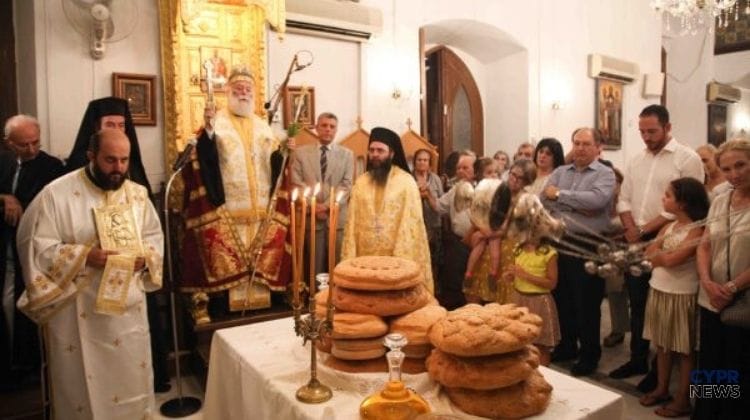
In Cyprus, Fanouropita appears every year at the end of August in thousands of homes and churches. August 27th is the commemoration of St. Fanourios, and one of the most characteristic customs of this day is the baking of a special cake, its blessing, and sharing with others.
Tradition also holds that St. Fanourios helps find what has been lost or what someone has long been searching for. Therefore, fanouropita is more than just a cake in Cyprus – it's one of the most recognizable religious customs of the end of summer.
Fanouropita is usually prepared on August 26, the day before the holiday, or on the morning of August 27.
The faithful bring the baked cakes to churches, where they are blessed. They are then cut and distributed to family, friends, neighbors, and other believers.
The custom is well-known in Cyprus. For years, the Church of Cyprus has described the celebration of the holiday, during which the faithful bring numerous fanouropites to the temples and, after the service, share them with others.
Relatively little is known about the life of Saint Fanurios.
According to tradition, his image was discovered in the ruins of an ancient church in Rhodes. The icon depicted the saint as a soldier, surrounded by scenes of his martyrdom.
Over time, Saint Fanurios became one of the most popular saints in Greece and Cyprus.
His name also came to be connected with a Greek word meaning "to reveal" or "to make visible." This gives rise to the popular belief that the saint helps find lost objects or find solutions to problems.
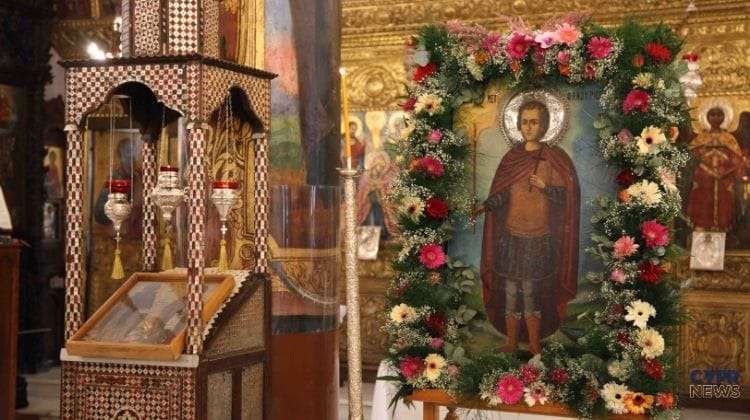
The folk tradition concerning the mother of Saint Fanurios is associated with Fanouropita.
According to a story passed down through generations, she was said to be harsh and insensitive towards the poor. The saint supposedly asked the faithful not to make sacrifices for him, but to pray for forgiveness for his mother.
Therefore, while sharing the cake, you can still hear the traditional wish for forgiveness for the soul of the saint's mother.
It is worth noting, however, that this is folk tradition, and not a confirmed element of the biography of Saint Fanurios. Information about his life is very scarce, and the Church of Cyprus also describes the story of his mother as a traditional account.
Over time, the custom also acquired another meaning.
People who have lost an important item or are looking for something particularly important in their lives ask St. Fanurios for help, promising to prepare fanouropita.
It is not always about material things.
In folk tradition, you can find requests to find a solution to a problem, a suitable job, or even a life partner.
This is why St. Fanurios remains so popular – his name is associated with finding and “revealing” what man is looking for.
Fanouropita is a simple, fasting cake, prepared without animal products.
The most commonly used ingredients are flour, sugar, oil, orange juice and zest, cinnamon, raisins and nuts.
In many homes, recipes vary and are passed down from generation to generation.
According to popular custom, the cake is prepared from a symbolic number of ingredients – usually seven or nine.
The result is an aromatic, moist cake with a very distinct aroma of orange, spices and dried fruit.
Saint Fanurios is also particularly popular in Cyprus.
Temples dedicated to him are located, among others, in the Acropolis in Nicosia and in Aradippou, and chapels dedicated to the saint also operate in other parts of the island.
On the evening of August 26 and the morning of August 27, in many churches you can see the faithful bringing hand-made fanouropyt.
After blessing, the cakes are shared among the worship participants, family, friends and neighbors.
It's one of those Cypriot traditions that combines religious custom with everyday life – and also makes many homes on the island smell of oranges, cinnamon and freshly baked cake at the end of August.
Sources: Church of Cyprus, Philenews