Skip to content
Supported by


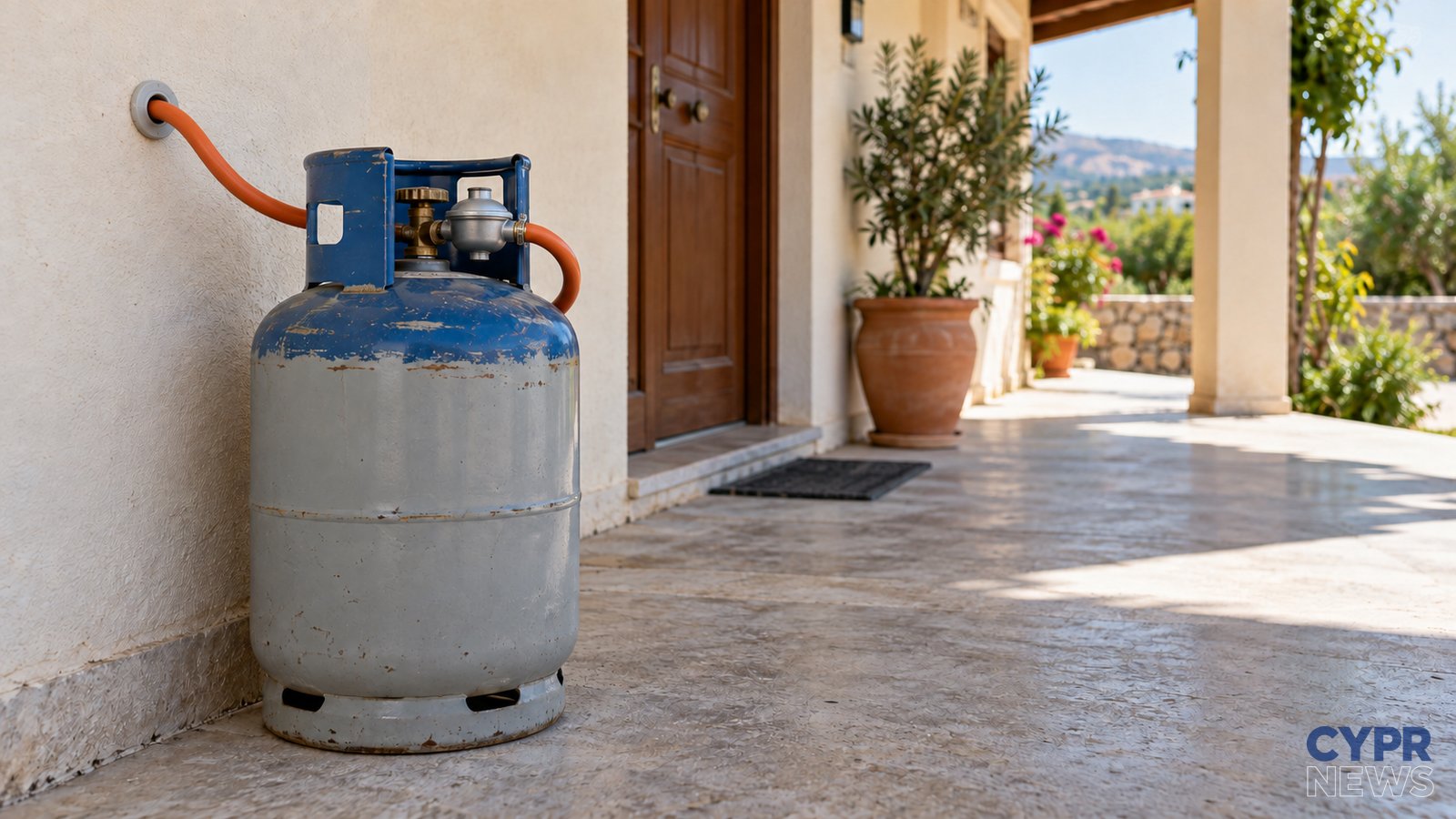
In Cyprus, a gas cylinder is often placed against an exterior wall, as household gas appliances use LPG supplied in cylinders or larger tanks. There is no widespread natural gas network on the island that delivers the fuel directly to homes.
Placing cylinders outdoors is also important for safety. LPG vapors are heavier than air and, if leaked, can accumulate near the floor, in crevices, and in drains. Therefore, ventilation, a vertical cylinder position, and proper installation are essential.
For a Polish city dweller accustomed to gas from the grid, a gas cylinder in front of their house may seem unusual. For many people in Cyprus, it's a common part of everyday life.
The cylinders contain LPG, or liquefied petroleum gas—a mixture of propane and butane. This is a different fuel than the natural gas supplied to many Polish homes via the grid.
LPG can power a stove, oven, grill, suitable water heater, or heating system. Larger demands can be met by a cylinder bank or a stationary tank.
The mere appearance of the cylinder doesn't indicate its purpose. In one home, it serves only the stove, while in another, it also serves additional appliances.
The most important thing is the ability to disperse the gas in the event of a leak.
LPG vapors can accumulate at low levels rather than rising quickly. In an enclosed space, a leak can create a flammable mixture that can be ignited by even a small spark.
The Cyprus Department of Labour Inspection recommends storing cylinders in a safe, well-ventilated place outdoors, in an upright position.
This doesn't mean, however, that just any location in front of the house will be suitable. A deep alcove, basement, or airtight closet without ventilation can all contribute to gas retention.
The cylinder should also not block an exit or be located where it can be easily tipped over or damaged.
When the burner stops working due to fuel consumption, the container does not automatically become harmless.
An "empty" cylinder may contain traces of LPG and its vapors. Therefore, cylinders awaiting replacement also require appropriate storage.
They should not be punctured, cut open, heated, or treated as scrap metal. Any damaged container should be reported to the supplier.
There is also no point in hiding a spare cylinder in the basement just because it is not currently connected.
In everyday use, an empty cylinder is most often returned to the seller or supplier and a full one is received.
Exchange points operate at select stores and gas stations, among others. Home deliveries are also available, although the range and ordering method vary by company.
When you first order, you should determine which cylinder and valve are compatible with your system. Don't assume that every cylinder and regulator are interchangeable.
You are also not allowed to transfer gas between containers yourself or use a car LPG dispenser as a filling point for your home cylinder.
The new tenant should find out where the cylinder and shut-off valve are located and who is arranging the replacement.
It's also worth determining whether the installation serves only the stove, or also heating or hot water. This affects gas consumption and the frequency of gas orders.
In a multi-apartment building, identifying wiring should not be done by trial and error. The owner or manager should identify the correct installation.
If the hose is cracked, the connection appears to be temporary, or there's a smell of gas near the cylinder, it needs to be checked by a professional. Simply replacing the cylinder shouldn't turn into a DIY repair.
LPG is essentially odorless. The recognizable odor comes from an added substance that makes leaks easier to spot.
This signal should not be ignored. Do not check for leaks with a lighter or attempt to light the burner to see if the gas is still working.
You also shouldn't repeatedly tighten random components and hope the problem goes away. The cause could be a valve, regulator, hose, or device.
The cylinder visible next to the house and the tank on the roof may belong to two independent systems.
In many Cypriot homes, water is heated by solar panels, with an electric heater providing backup when needed. The cylinder can then be used solely to power the stove.
So don't assume that a lack of hot water means you need to order gas. First, you need to know how the system works in your specific apartment.
Similarly, the presence of gas does not mean that the house is centrally heated. Air conditioning or other devices may be used to heat the rooms.
A gas burner is designed for a specific purpose. Using the stove for home heating increases the risk of fire and dangerous combustion.
If the device is not functioning properly, carbon monoxide can be produced. It doesn't have the characteristic odor of escaping LPG, so these are two different hazards.
Functional equipment, adequate ventilation and proper installation remain important even when the cylinder itself is outdoors.
A wall-mounted cylinder doesn't have to be a makeshift solution. It can be part of a properly designed installation, adapted to Cypriot conditions.
However, not every arrangement is ideal. The location should take into account ventilation, nearby openings and drains, heat sources, and the possibility of damage to the container.
The answer to the question why the cylinder is outside therefore combines two issues: the method of delivering fuel to Cypriot homes and limiting the risk of gas accumulation inside the building.