Skip to content
Supported by


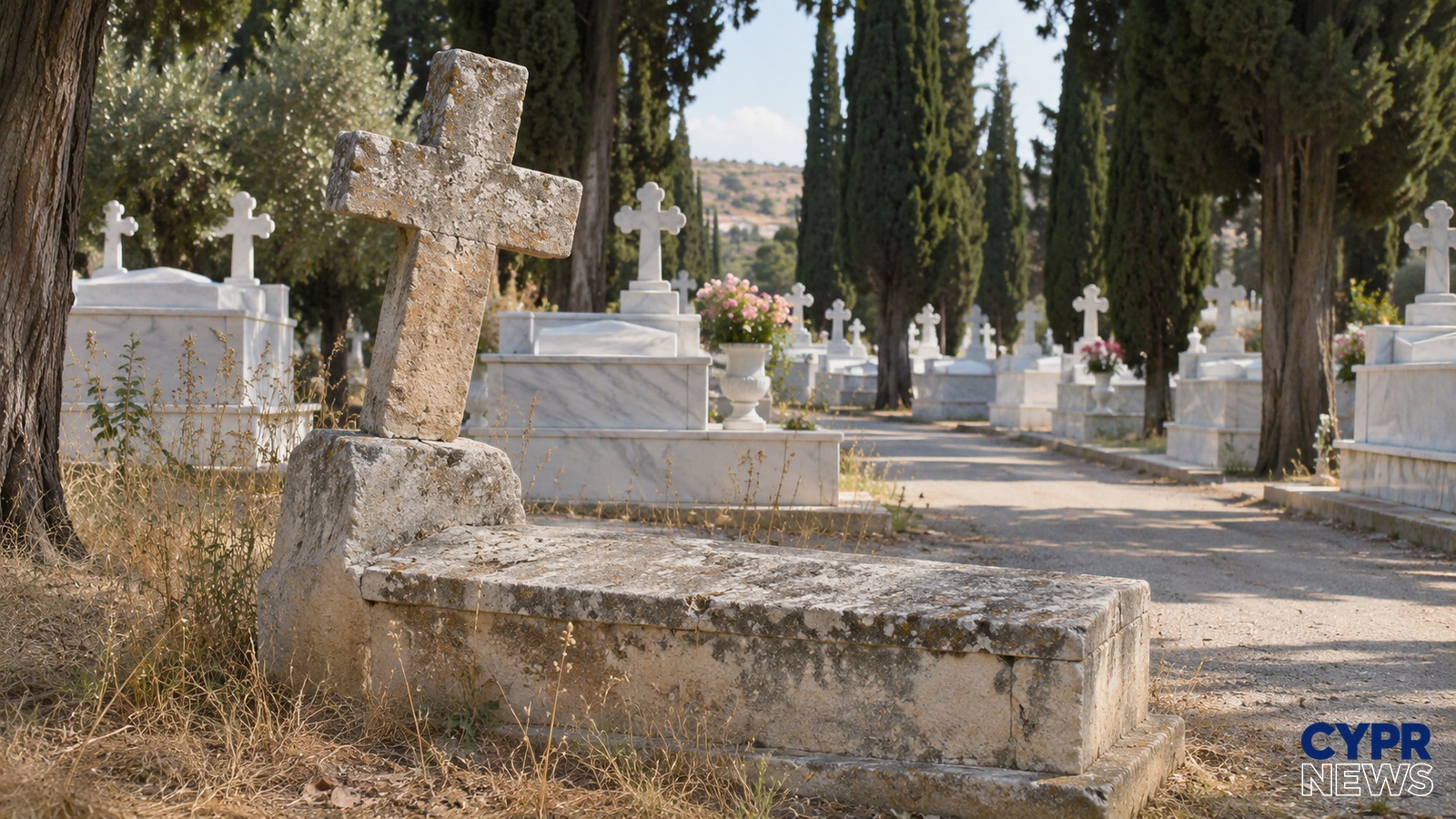
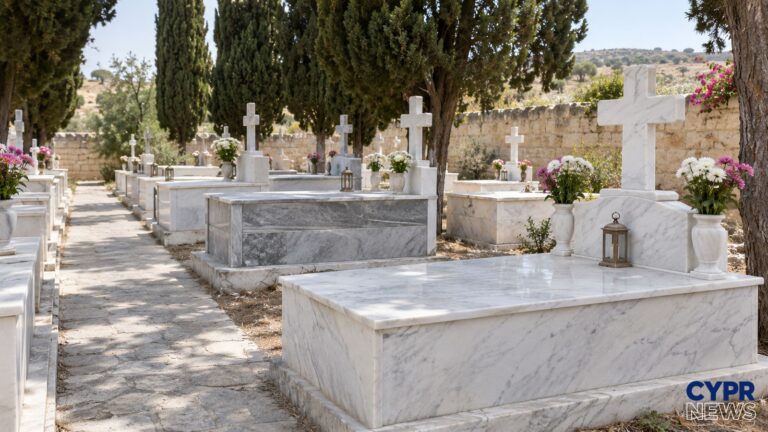
Graves in Nicosia were reportedly being sold again after verifying whether relatives of the deceased were visiting them. According to new reports concerning the Saints Constantine and Helena Cemetery in Pallouriotissa, a person associated with the church was deliberately tilting crosses and then waiting for the families' reaction.
The document also describes how transactions were concealed in the documents. The buyer allegedly received a receipt for the purchase of the burial plot, while the copy retained in the church records contained a small entry for water charges. These are further accounts of past irregularities, the effects of which continue to be felt by families today.
According to information provided to the church committee operating at the cemetery, old graves were selected, including those from the 1930s and 1940s, which appeared neglected.
A person associated with the church had kick the crosses until they leaned towards the ground. Then, for about a month, they observed whether anyone reported the damage or repaired the cross.
The lack of response was to be interpreted as a sign that no one was interested in the grave. The plot would then be put up for sale again, even though it had already been purchased.
These are accounts describing the alleged course of action. They are not presented as findings of a final judgment.
Andreas Karagiorgis, secretary of the church committee at the cemetery, also described a mechanism that was supposed to allow for concealment of actual transactions.
When issuing a receipt, a piece of cardboard was inserted between the original and the copy. This prevented the information about the grave sale and the amount paid from being printed on the second copy.
The buyer received a document that appeared to be a valid purchase confirmation. After the buyer left, the box would be removed, and a copy bearing the same number would be entered. a five-pound charge for water.
As a result, the document kept by the family and the record remaining in the books described completely different activities.
One story involves a police officer whose family owned a plot in the cemetery. When a driver accidentally hit a grave with his car, the officer warned him.
The driver allegedly replied that he had damaged his own family grave. The police officer, however, argued that the site belonged to his family.
Both presented documents. Only their comparison would reveal that the same place was sold to two different buyersAccording to the report in the publication, the police then took up the matter.
There was also a case of someone who inherited a grave from her godfather. When she wanted to bury her mother there, she discovered that a member of another family had previously been buried there. The site was then sold again for 15,000 Cypriot pounds.
A separate topic concerns the use of passages between graves.
According to reports, the cemetery ceased to be sufficient for the needs of the residents years ago. Before the new necropolis in Halepianes was opened, the archbishopric was supposed to temporarily allow burials in the alleys.
Some of these transactions were conducted officially. Others allegedly took place using false documents and without the knowledge of the archbishopric. To create additional space, cypress trees growing along the passages were also cut down.
Previously, the use of graves from before 1950 was considered. However, the archbishopric's lawyer reportedly pointed out that they belonged to specific families or their heirs and could not be freely disposed of.
Karagiorgis said that one of the people involved in the case was supposed to return approximately PLN 1000 to the Church after disclosing the irregularities. 40,000 Cypriot pounds.
The amounts mentioned in these reports refer to past transactions carried out in Cypriot currency, before the adoption of the euro.
The new reports expand on the methods employed, but do not resolve individual family disputes over burial sites. It is also unclear whether new proceedings have been initiated in connection with the latest publication or whether anyone has been charged.