Skip to content
Supported by


Limassol combines a modern seaside town with a historic center, an extensive promenade, and some of the most important archaeological sites in Cyprus. Here, you can stroll among skyscrapers and luxury yachts, and a few kilometers away, explore the ruins of ancient cities, medieval castles, and traditional wine-growing villages.
Check out what to see in Limassol, which places are worth visiting first and how to plan your visit to the city and its surroundings.
Molos is Limassol's most prestigious promenade, stretching along the coast between the city center and the marina. The wide promenade is lined with palm trees, lawns, playgrounds, small fountains, and outdoor sculptures.
This is one of the most popular walking spots in the city. In the mornings, you can spot runners and cyclists, and in the evenings, locals and tourists watching the sunset.
The promenade leads directly to the old port, marina, and historic center, making it a good starting point for exploring Limassol. The region's official tourism portal lists Molos and its sculpture park among the city's most important sites.
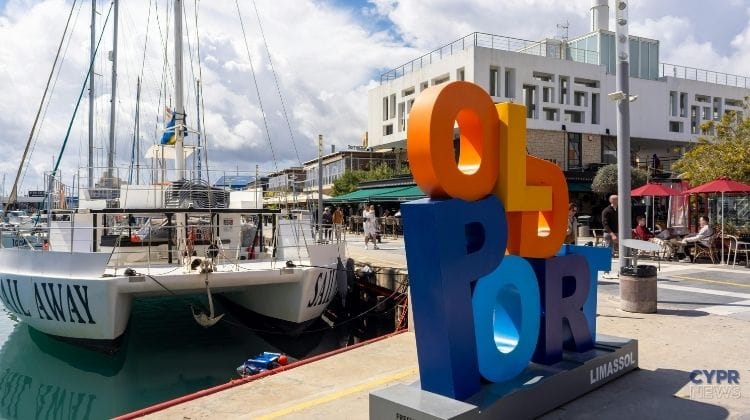
Limassol Marina is one of the city's most recognizable contemporary landmarks, home to marinas, restaurants, cafes, shops, and beachfront apartments.
The marina is adjacent to the old port, castle, and historic center, making it possible to connect all these places in a single stroll. At night, the area is especially striking thanks to the lights reflecting off the water.
Right next to the marina is the old port of Limassol. The former port area has been transformed into a modern meeting place with restaurants, cafés, and unobstructed sea views.
It's a quieter alternative to the marina area and a good place to relax between visiting the castle and walking along the promenade.
This medieval castle stands in the heart of the old town, near the old port. According to tradition, the wedding of King Richard the Lionheart of England and Berengaria of Navarre took place here in 1191.
The building has been destroyed and rebuilt numerous times. Its current appearance is largely due to the reconstruction carried out by the Ottomans in the late 16th century. The castle also served as a prison in the past, and today houses the Cyprus Medieval Museum.
There are many restaurants and cafes around the castle, making the square one of the liveliest spots in the historic center.
The castle area is best explored on foot. The narrow streets of the old town are home to preserved traditional buildings, small workshops, galleries, local shops, and taverns.
It's worth crossing Anexartisias Street, exploring Saripolou Square, and strolling leisurely among the restored townhouses. Limassol's city center combines historic architecture with modern cafes, restaurants, and cultural spaces.
The official walking route through the historic center is approximately 2 kilometers long and includes 20 stops. Walking at a leisurely pace takes about two and a half hours.
Dasoudi is one of the most popular urban beaches in Limassol. Its distinctive feature is a strip of trees that provide natural shade, which is especially valuable during the hot months.
The beach is home to restaurants, cafes, walking trails, and recreational amenities. It's easily accessible by bus along the coast.
Dasoudi is perfect both as a place for a full day of relaxation and as a short stop when exploring the seaside part of the city.
Lady's Mile is a long beach located on the Akrotiri peninsula, near Limassol. Its different sections have different character, ranging from areas with restaurants and sun loungers to quieter stretches of coastline.
The shallow water makes the beach a popular choice for families with children. However, access without a car may be less convenient than beaches located within the city limits.
Kourion is one of the most important archaeological sites in Cyprus. It is located approximately 19 kilometers west of Limassol, on a hill overlooking the Mediterranean Sea.
The most famous structure is the restored Greco-Roman theater. Other sites include the House of Eustolios, remains of the agora, an early Christian basilica, and mosaics preserved in former residences.
It's worth setting aside at least an hour and a half for the tour. In summer, it's best to arrive in the morning, as much of the site is exposed to the sun.
Below the archaeological site lies Kourion Beach, surrounded by characteristic light-colored cliffs.
The beach is about a kilometer long, with a sandy and pebbly shore. There are tavernas on site, as well as showers, changing rooms, sun loungers, and umbrellas. Combining a visit to the ancient ruins with a relaxing day by the sea is a good idea for a full-day trip.
A few kilometers from Kourion is Kolossi Castle, one of the most important medieval fortresses in Cyprus.
The estate was donated to the Order of St. John in the early 13th century. The area was known for its fertile crops, vineyards, and sugarcane production. The region is also associated with the history of the sweet wine Commandaria.
The castle can be visited relatively quickly, so it is best to combine a visit with a trip to Kourion.
On the eastern side of Limassol are the ruins of Amathus, one of the most important ancient city-kingdoms of Cyprus.
The site contains the remains of an agora, baths, a temple of Aphrodite, early Christian basilicas, and ancient tombs. Amathus was an important center of the cult of Aphrodite-Astarte.
Some of the ruins can also be seen from the coastal walking route along the coast.
To the west of the city lies the Akrotiri Salt Lake. This area is important for migratory birds, which can be observed primarily during the cooler months.
Before visiting, it's worth checking weather conditions and road accessibility. In summer, the lake can be largely dry.
The Akrotiri Environmental Center highlights the natural significance of the lake and its surrounding areas. The official Cyprus tourism portal designates this area as one of the most important nature-watching sites in the Limassol region.
The Limassol region is deeply rooted in Cypriot winemaking. The southern slopes of the Troodos Mountains are home to traditional villages known as Krassochoria, or wine villages.
The most famous are Omodos, Koilani, Vouni, and Lofou. Here you can see stone houses, traditional grape presses, small wineries, and family-run tavernas.
The region is particularly associated with Commandaria, a sweet dessert wine with a centuries-old history.
A day trip to Molos is best started at the Molos promenade. Then, you can walk through the marina and old port to the castle and historic center.
In the afternoon, relax on one of the city's beaches or visit ancient Amathus. Kourion, Kolossi Castle, and the wine villages are best left for a separate trip, especially if you plan to use public transportation.
The center, the Molos promenade, the old port, the marina, and the castle can all be easily explored on foot. Buses run to the districts further east and to the city's beaches.
If you plan to travel without renting a car, check out our guide Buses in CyprusWe explain how public and intercity transport works, where to buy tickets, and how to get around the island using public transport.
Kourion, Kolossi Castle and the wine villages are easier to reach by car, although bus connections are also available to some destinations.
Limassol offers much more than beaches and modern developments. In the center, you'll find a medieval castle, an old town, a port, and an elegant marina. Nearby, you'll find ancient Kourion and Amathus, Kolossi Castle, and traditional wine-growing villages.
A single day is enough to explore the city center. To also see the region's most important attractions, it's worth dedicating at least three days to Limassol.
A day is enough to explore the city center. If you also want to visit Kourion, Kolossi, Amathus, and the wine villages, it's worth planning a stay of at least three days.
The most important places are the Molos promenade, the marina, the old port, the medieval castle and the streets of the historic center.
Yes. The city center and seaside are easily explored on foot, and buses run to many beaches and neighborhoods. A car is more convenient for trips to villages and attractions outside the city.
The most important monuments in the region are ancient Kourion, the castle of Kolossi and the ruins of the city-kingdom of Amathus.